Richelieu Rock is the crown jewel of Thai diving — a horseshoe-shaped limestone pinnacle in the open sea north of the Surin Islands, far beyond the reach of any day boat. It is reached almost exclusively by liveaboard, and divers come back from it talking about purple soft coral lighting up the entire reef, dense schools of barracuda and trevally, and the chance — never the promise — of a whale shark drifting out of the blue. This guide covers when to go, what level you need, the depths and currents you'll meet, and how to pick the right boat for the trip.
Where is Richelieu Rock?
Richelieu Rock sits in the Andaman Sea about 18 km east of the Surin Islands, near the Thai–Myanmar maritime border. At low tide only the tip of the pinnacle breaks the surface; everything else is underwater, dropping away on all sides. Because it is so far offshore, there is no practical day-trip access from Phuket or Khao Lak — you reach it by liveaboard, usually on a 4-day Similan-and-Surin itinerary or a longer trip that combines it with Koh Bon and Koh Tachai.
The site's isolation is exactly what makes it special. With no land nearby and strong nutrient-rich currents sweeping the pinnacle, marine life concentrates here in numbers you rarely see on the inshore reefs. It is consistently rated one of the top dive sites in Southeast Asia, and for many divers it is the single reason they book a liveaboard at all.
Best time to dive Richelieu Rock
The diving season in the Similan and Surin marine parks runs roughly from mid-October to mid-May. Outside that window the parks close for the southwest monsoon, the sea gets rough, and liveaboards stop running — so any trip to Richelieu Rock has to fall inside the dry season.
Within the season, February to April is the prime window for Richelieu Rock specifically. Visibility is at its best, the sea is calmest, and this is also when whale sharks and manta rays are most often reported in the area. Plankton blooms that draw the big animals also mean visibility can occasionally drop, but the trade-off is the reason people travel here.
If you want the best odds of a memorable trip, aim for a departure between February and April and book several months ahead — the better boats sell out their peak-season cabins early.
Depths, currents and what to expect underwater
Richelieu Rock is a multi-level dive. The reef starts just a few metres below the surface and slopes down to around 35 metres, so you can spend most of your dive shallow, working your way around the pinnacle, while deeper sections are there for those who want them. Most dives are run as drifts that circle the rock, letting the current do the work.
Currents are the one thing to respect here. They can be mild or genuinely strong depending on the tide and conditions, and they can change during a dive. This is why the site is rated intermediate to advanced rather than beginner-friendly — good buoyancy and comfort with current make the difference between a stressful dive and a sublime one.
Underwater, the headline is the colour: the pinnacle is carpeted in purple and pink soft coral, with anemones, sea fans and barrel sponges everywhere. Look for seahorses, harlequin shrimp, tigertail seahorses, frogfish and ghost pipefish on the macro side, and schooling barracuda, trevally, snapper and the occasional reef shark in the blue. Whale sharks and mantas are the dream sightings — possible, never guaranteed.
Choosing a liveaboard for Richelieu Rock
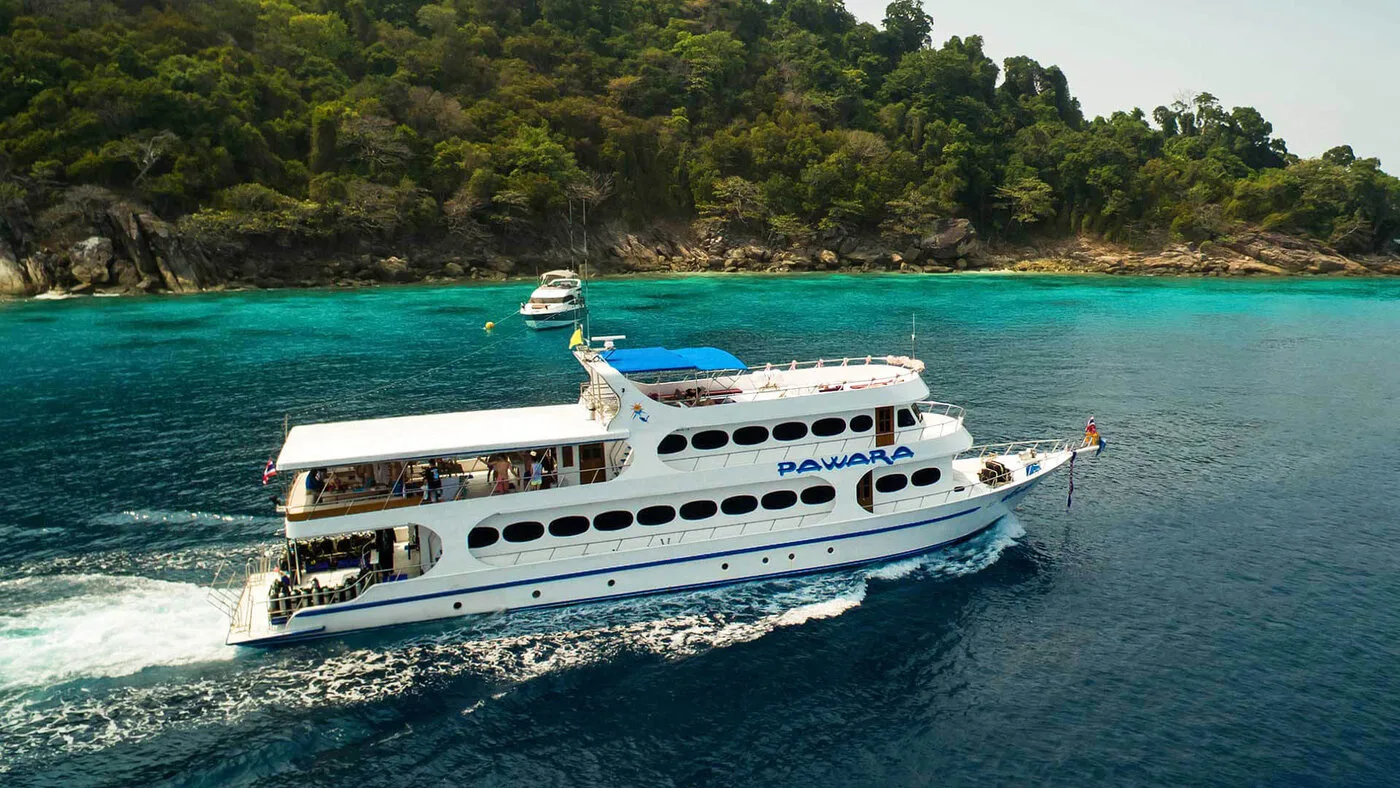
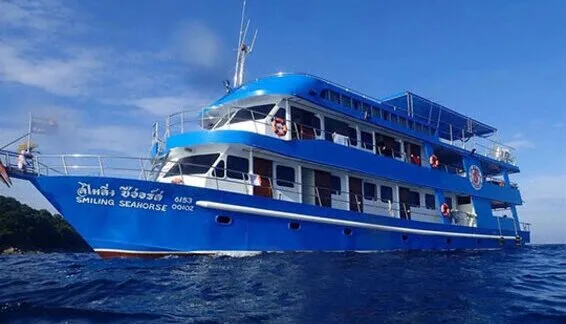
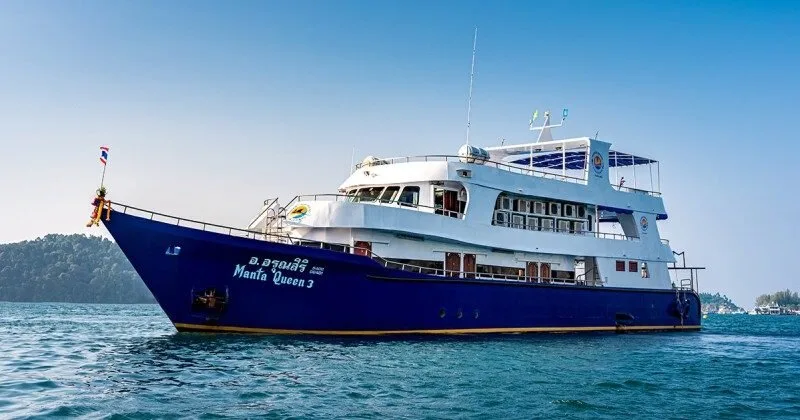
Because Richelieu Rock is liveaboard-only, your experience depends heavily on the boat. Most Similan-and-Surin itineraries that include Richelieu Rock run 4 days and 4 nights from Khao Lak, with transfers from Phuket included. Expect three to four dives a day, including a night dive, and a crew that knows how to time the pinnacle around the current and the day-boat crowds.
The price follows the selected boat, cabin, departure and itinerary rather than a general fleet-wide range. Confirm the number of days and dives, transfers, meals, park fees, equipment and Nitrox in the quotation. If no current published rate applies to your departure, pricing is on request.
If you want to combine Richelieu Rock with the wilder, less-visited dive sites of the Mergui Archipelago just across the border in Myanmar, a handful of specialist boats run dedicated trips there. Those itineraries are longer and carry an additional per-person government permit and marine-park fee that is paid on top of the charter price.
Tell us your certification level, your dates and your budget and we'll match you to a boat that actually fits — from family-friendly group liveaboards to small premium vessels.
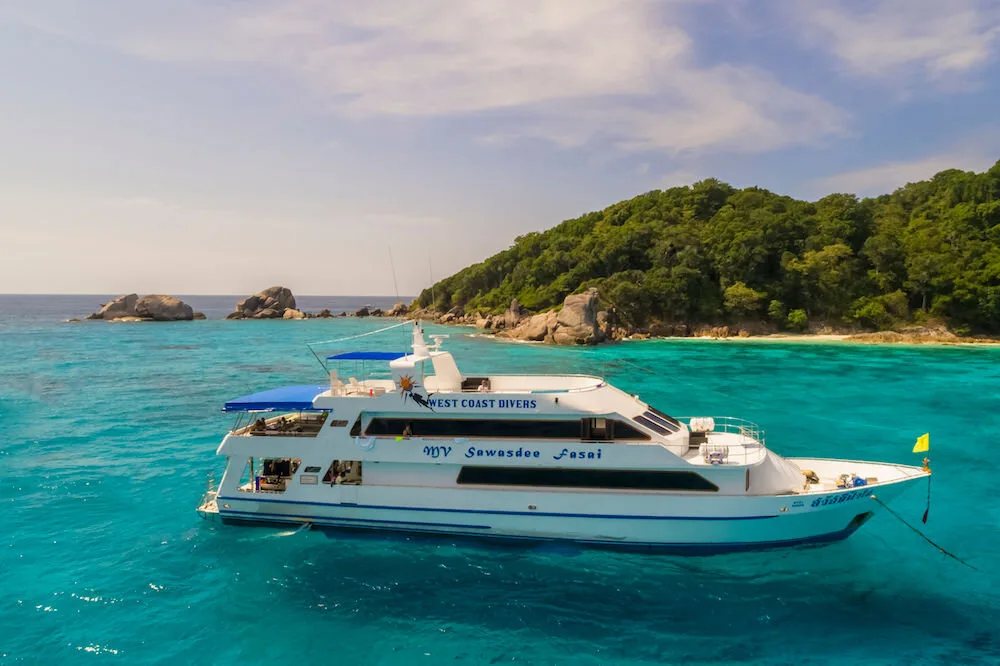
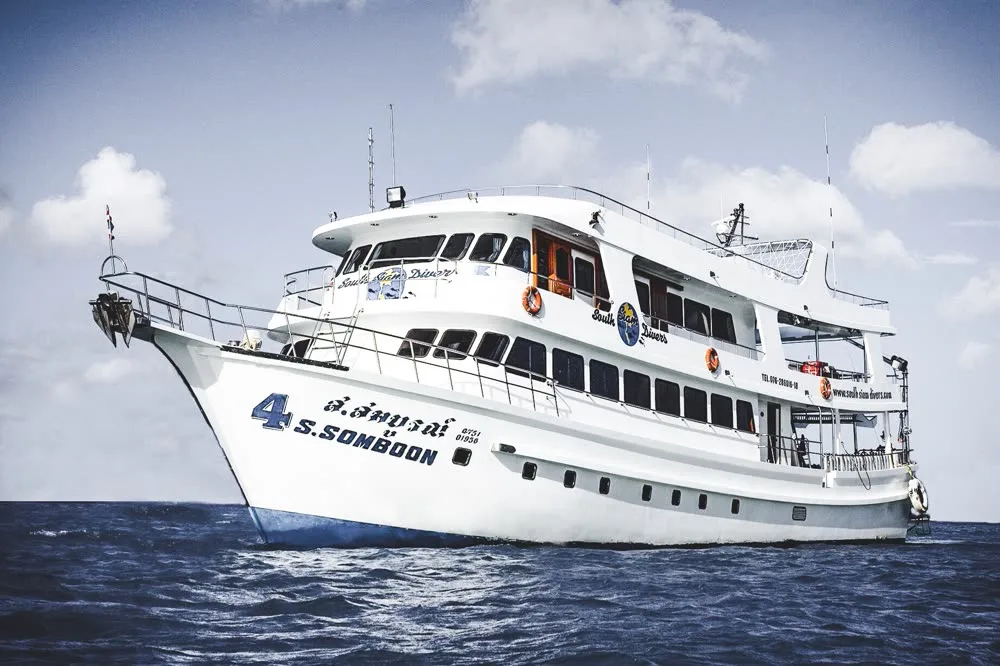
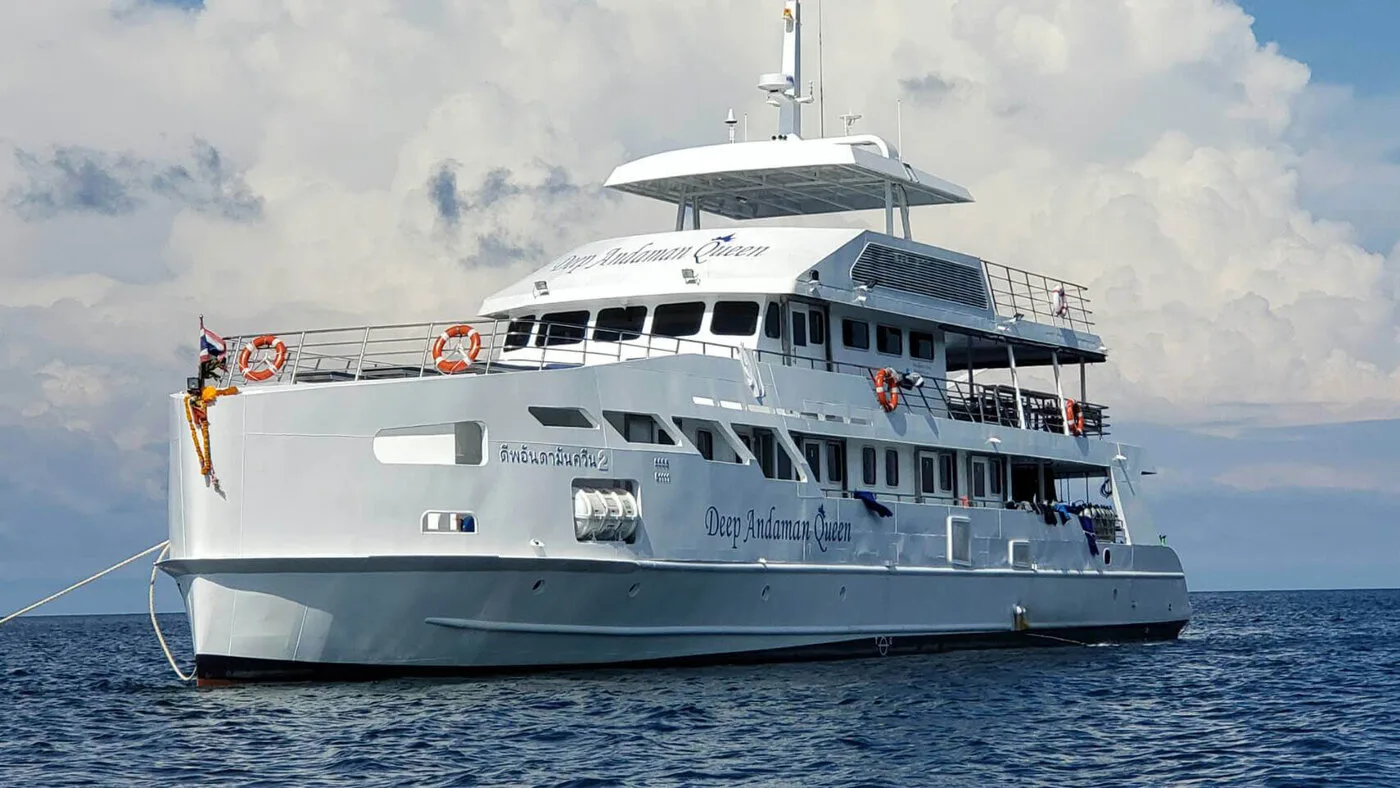
Featured vessels for this trip
Frequently asked questions
Do I need to be a certified diver?
Yes — Richelieu Rock and the Similan liveaboard sites are for certified divers. You'll need at least an Open Water certification, and for the deeper, current-prone sites Advanced Open Water is strongly recommended. If you're not certified yet, some boats offer courses on board, and snorkellers and non-divers are welcome on many trips.
What level do I need for Richelieu Rock?
Richelieu Rock is rated intermediate to advanced. The reef itself can be dived shallow, but currents can be strong and change during the dive, so good buoyancy control and some experience in current are important. Advanced Open Water plus a handful of logged dives is the comfortable minimum; complete beginners should build experience on calmer sites first.
When can I see whale sharks and manta rays?
February to April offers the best chances, when plankton blooms draw the big animals to the pinnacles around Richelieu Rock, Koh Bon and Koh Tachai. That said, these are wild animals — sightings are never guaranteed on any single trip, and many divers visit the area several times before they get lucky.
Is Nitrox included for free?
It depends on the boat. Some liveaboards include nitrox for certified nitrox divers, others charge a supplement for the trip. We'll confirm exactly what's bundled before you book so there are no surprises. If you're not nitrox-certified, many boats can run the course on board.
Do I have to bring my own equipment?
No. Most liveaboards rent full equipment sets, and rental is either included or added as a per-trip fee. Many divers bring their own mask, computer and exposure suit and rent the bulky items. Tell us your needs and we'll make sure rental gear in your size is reserved.
Do you take non-divers, snorkellers and families?
Many liveaboards welcome snorkellers and non-diving companions, and some are genuinely family-friendly. The Surin reefs offer excellent snorkelling, and surface time at anchor is comfortable. Let us know your group and we'll point you to the boats that handle mixed dive/non-dive parties well.
I'm travelling solo — can I share a cabin?
Yes. Most boats let solo travellers share a twin or bunk cabin with another guest of the same sex to avoid a single-occupancy supplement, or you can book a cabin to yourself for an extra charge. Tell us your preference and we'll arrange it when we reserve.
How do deposits, payment and cancellation work?
Typically a deposit confirms your cabin, with the balance due before departure. Cancellation terms vary by boat and season, especially for peak February–April dates. We'll give you the exact deposit, balance and cancellation policy in writing for your chosen vessel before you commit.
What about the Similan national park fees?
The Similan and Surin marine parks charge an entry fee for foreign visitors, and this is usually paid separately from the charter price. The amount is set by the national park authority. We'll tell you the current fee and whether your boat collects it on board or includes it.
Do I need a visa or extra fees for Burma / Mergui?
Trips that cross into the Mergui Archipelago in Myanmar require special clearance, and operators handle the paperwork for you. There is an additional per-person government permit and marine-park fee paid on top of the charter. You generally won't need a separate tourist visa for these diving permits, but bring your passport — we'll confirm the current requirements for your trip.
How do I get to the boat?
Most Similan-and-Surin liveaboards depart from Khao Lak, north of Phuket. Boats usually include a transfer from Phuket or Phuket airport hotels to the pier. We'll arrange the pickup time and point once your trip is booked.
Is there a seasickness risk?
The dry-season Andaman Sea is generally calm, but the open-water crossing to the Surin Islands and Richelieu Rock can be bumpy, especially at night. If you're prone to motion sickness, bring medication and take it before departure. The diving itself is well sheltered around the pinnacles.
What should I pack?
Light clothing, swimwear, reef-safe sunscreen, a hat and sunglasses, any personal dive gear and computer, your certification card and logbook, seasickness tablets, and a light layer for the evenings and air-conditioned cabins. Space is limited on board, so pack in a soft bag rather than a hard suitcase.
Do I need dive insurance?
We strongly recommend it. Diving insurance that covers recompression treatment and evacuation (such as DAN) is inexpensive and essential given how remote Richelieu Rock is. Some boats require proof of cover before they'll let you dive — we'll let you know if yours does.