Phuket is the launch pad for the entire Andaman Sea — from a sunset cruise around Phang Nga Bay to a week-long dive expedition out to the Similan Islands and the legendary Richelieu Rock. With a fleet of more than a hundred vessels, the hard part is not finding a boat but choosing the right one. This guide walks you through the main charter types, the dive season, the best sites, sample routes and honest price ranges so you can plan a trip that actually fits your group.
Which type of charter is right for you?
There are four broad ways to get on the water in Phuket. A private motor yacht is the classic choice for day trips and overnighters: fast, comfortable and crewed, ideal for families and groups who want flexibility and a flybridge to lounge on. A sailing or power catamaran trades a little speed for huge deck space and stability, which makes it the favourite for parties, sundowner cruises and slow island-hopping with kids.
A speedboat is the workhorse for short, punchy day trips when you want to reach the Phi Phi Islands or James Bond Island quickly and be back by dinner. Finally, a liveaboard is a dedicated dive vessel that sleeps you on board for three to seven days so you can reach the offshore reefs of the Similan and Surin marine parks and the Mergui Archipelago that day boats simply cannot.
If diving is your priority, go straight to a liveaboard. If the trip is about the experience on deck — swimming, sunbathing, dinner at anchor — a private yacht or catamaran will serve you far better than a dive boat ever could.
The Andaman dive season
The Similan and Surin national parks, which hold the region's best-known reefs, are open roughly from 15 October to 15 May and close for the southwest monsoon over the summer. The water is warm year-round (around 27–30°C), but visibility, calm seas and marine life all peak inside that window.
The sweet spot for big animals is February to April. This is when whale sharks and manta rays are most reliably seen around Richelieu Rock, Koh Bon and Koh Tachai, and when the sea is at its flattest. Early season (November–December) is quieter and greener but still excellent for reef life and the Boonsung wreck.
The Mergui Archipelago in Myanmar runs on a similar calendar and is the choice for divers who want truly remote, lightly dived sites such as Black Rock and Western Rocky. Crossing the border requires a per-person government permit and marine-park fee that is arranged in advance and paid on top of the charter — your operator handles the paperwork, but budget for it.
The dive sites worth planning a trip around
Richelieu Rock is the headline act: a horseshoe-shaped pinnacle rising from 5 to about 35 metres, suited to intermediate and advanced divers, and at its best from February to April when whale sharks and mantas pass through. It is the most photographed site in the Andaman for good reason.
Koh Bon and Koh Tachai are dramatic deep pinnacles (down to 40–45 metres) where manta rays cruise the current lines — advanced sites best dived January to April. Elephant Head Rock and Christmas Point in the Similans are swim-through playgrounds for intermediate divers, while in Mergui, Black Rock is an advanced wall dropping past 100 metres into the blue.
Beginners and snorkellers are not left out. Anita's Reef and West of Eden in the Similans are gentle, shallow and full of colour, and the Boonsung wreck near Khao Lak sits in just 13–20 metres — perfect for early Open Water dives and easy enough for a first wreck. Most liveaboards mix easy and challenging sites across a single itinerary.
Sample itineraries
Day trip (yacht or catamaran): a morning run into Phang Nga Bay for the limestone karsts and sea caves, lunch and a swim at a quiet anchorage, then a slow sunset cruise back to Phuket. Easy for all ages and the most popular first taste of chartering here.
Two to three nights (private yacht or catamaran): Phuket to the Phi Phi Islands and Koh Lanta, anchoring in sheltered bays, with time for kayaking, paddleboarding and beach stops. A relaxed loop that mixes lively snorkelling with proper downtime on board.
Four to seven days (liveaboard): the full Similan, Koh Bon, Koh Tachai and Surin circuit, often extended to Richelieu Rock, with three to four dives a day. Serious divers add the Mergui crossing for a week of remote, big-animal diving well away from the day-boat crowds.
What does a Phuket charter cost?
Prices depend on the vessel, date, cabin or guest allowance, duration and itinerary. A shared liveaboard follows its per-person or cabin terms, while a private charter is normally quoted for the whole boat. Current yacht-specific tariffs and prices on request appear in the catalogue; confirm the selected departure before relying on any figure.
For a private day or overnight charter, compare the confirmed whole-boat total and the exact inclusions. Crew, fuel allowance, meals, drinks, transfers and national-park fees differ by vessel and package. Water toys, photography, celebrations and other extras are arranged on request unless already included.
The cleanest way to get an accurate number is to tell us your dates, group size and the kind of trip you want — we will match you to the right vessels and send current, all-in pricing rather than a teaser figure.
How to book and what to bring
Peak-season dates (December to April) and the most popular liveaboards sell out months ahead, so book early if your dates are fixed. A deposit secures the booking with the balance due before departure; cancellation terms depend on the vessel and how far out you cancel, and we will spell these out before you pay anything.
For day charters, pack light: swimwear, a hat, reef-safe sunscreen, a light layer for the ride home and a dry bag for phones. For liveaboards add a towel, motion-sickness tablets if you are prone, and your certification card and logbook. Rental dive gear and Nitrox are available on most dive boats, and many operators include Nitrox for certified divers.
You do not need to be a diver to enjoy a liveaboard — most welcome snorkellers and non-diving partners — and you do not need your own boat-handling experience for any charter, as every vessel here comes fully crewed.
Featured vessels for this trip
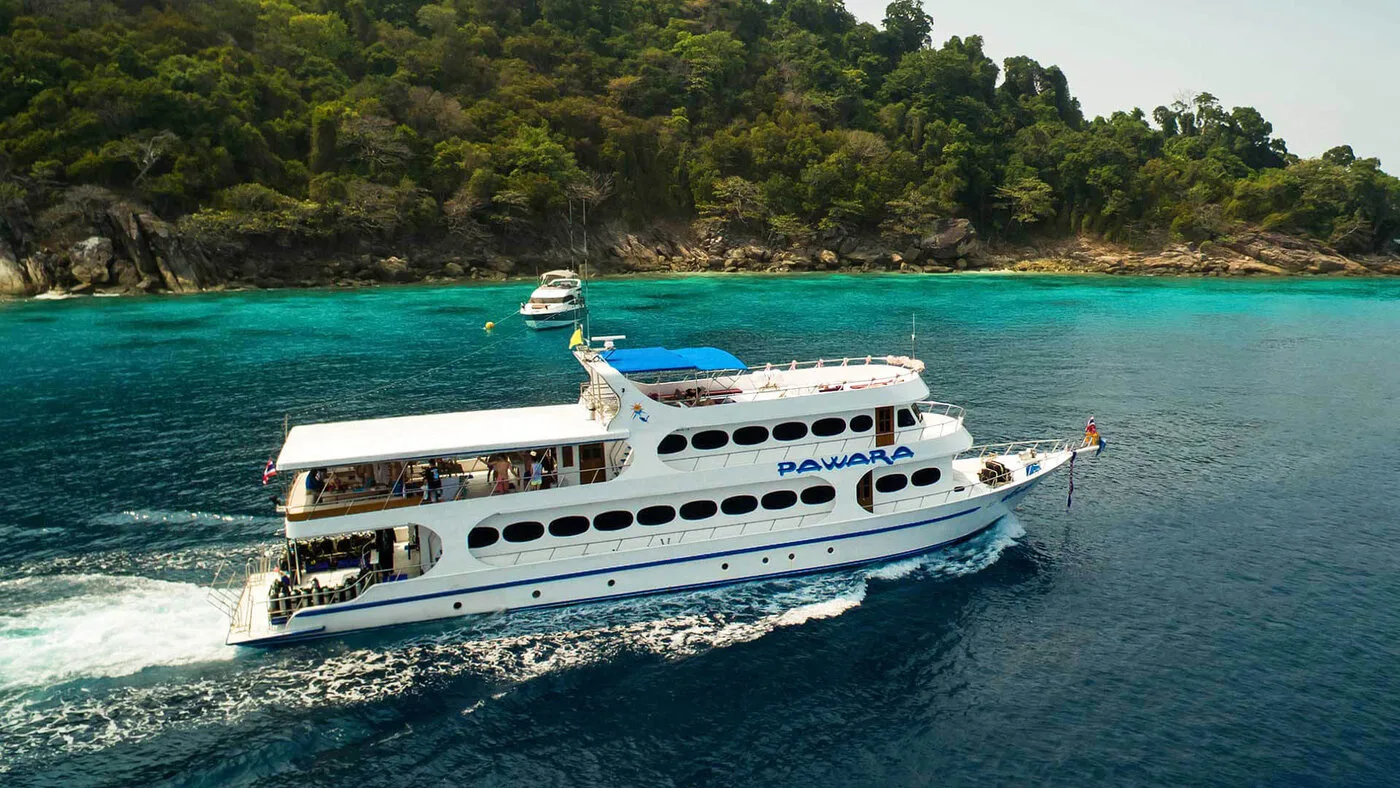 MV Pawara
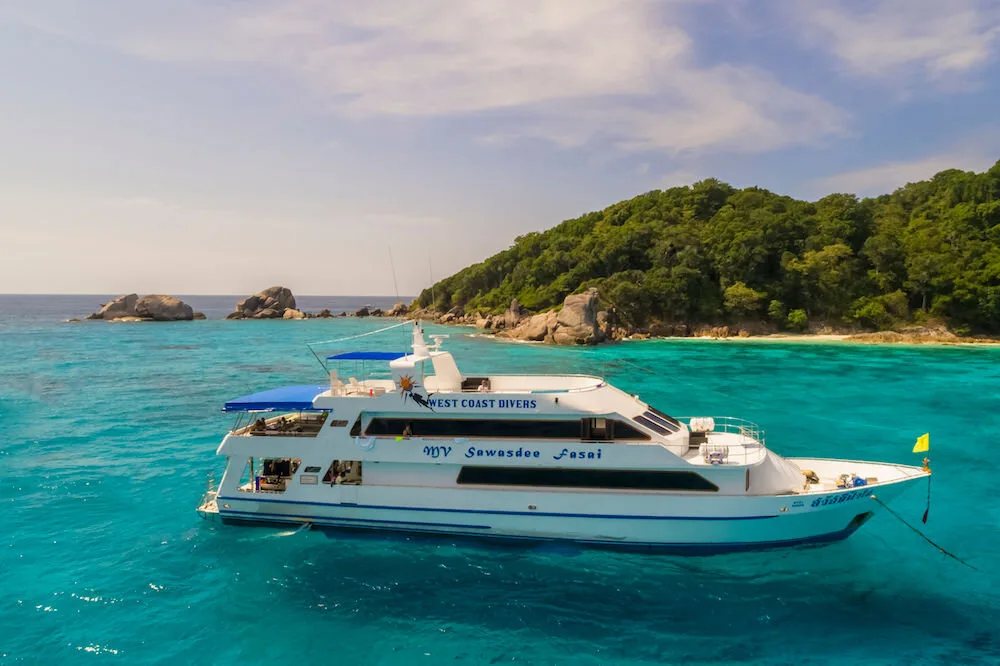 MV Sawasdee Fasai
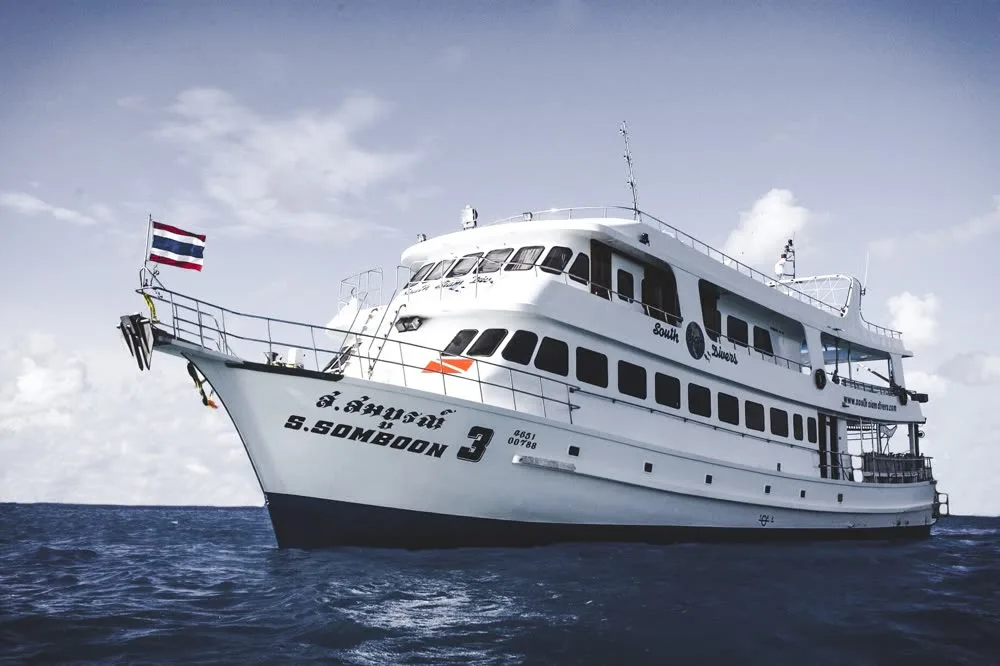 MV South Siam 3
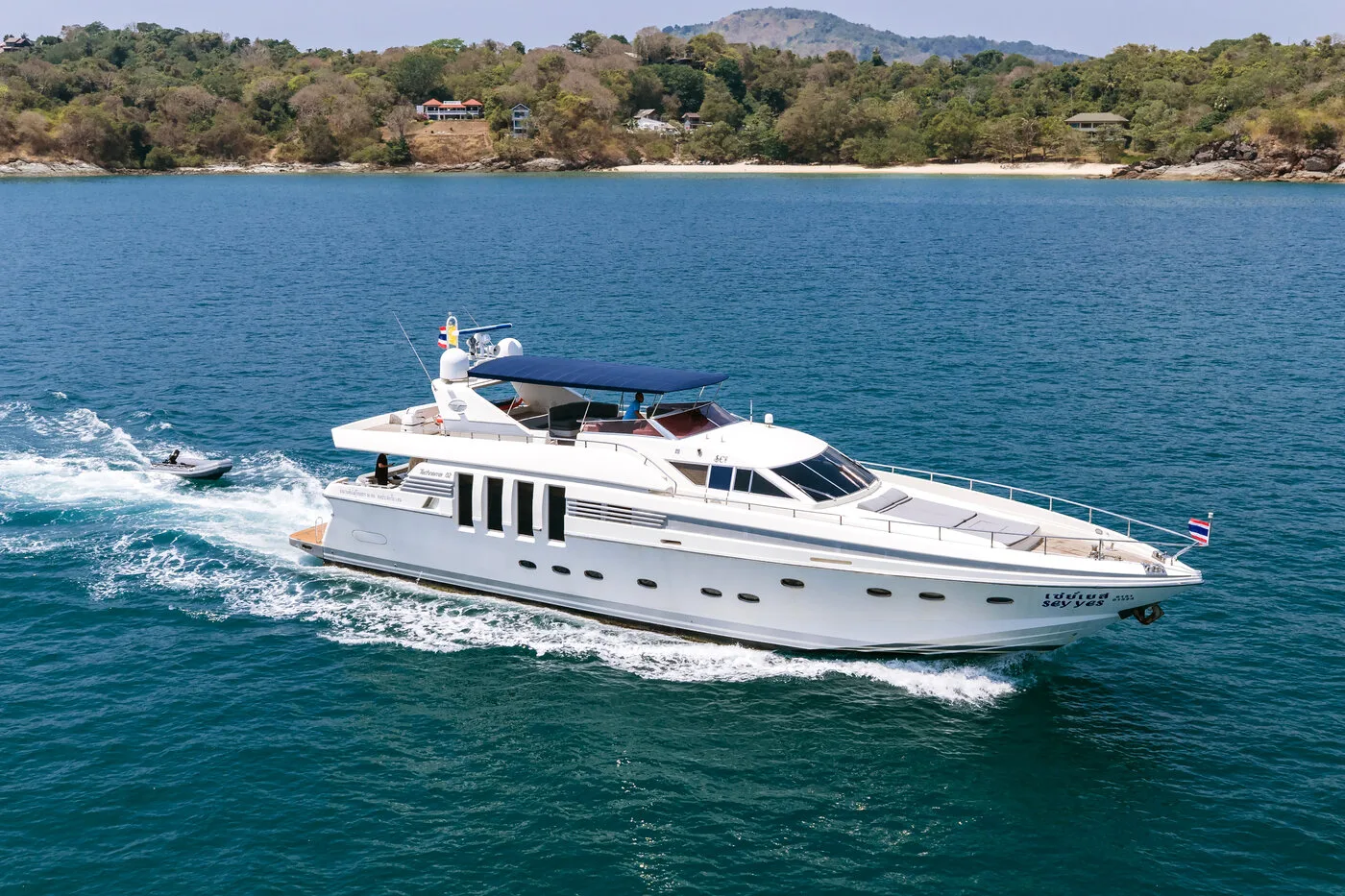 Say Yes · Rizzardi Technema 89
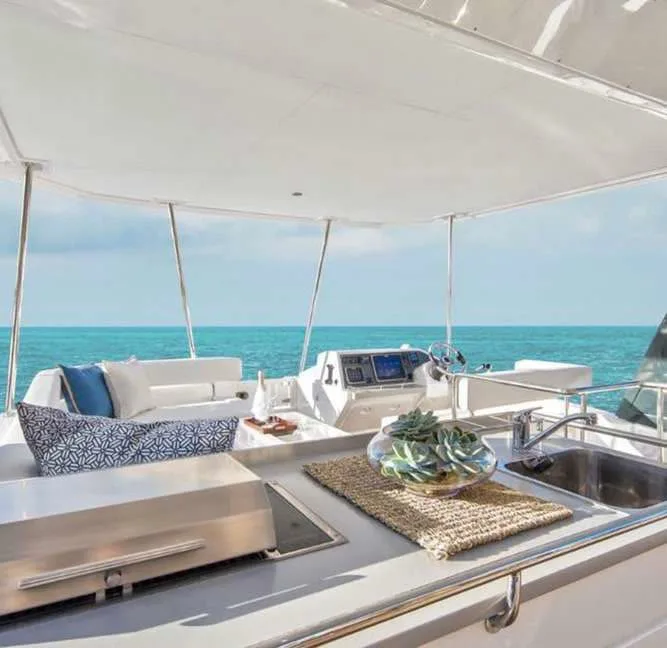 Estrella · Leopard 43
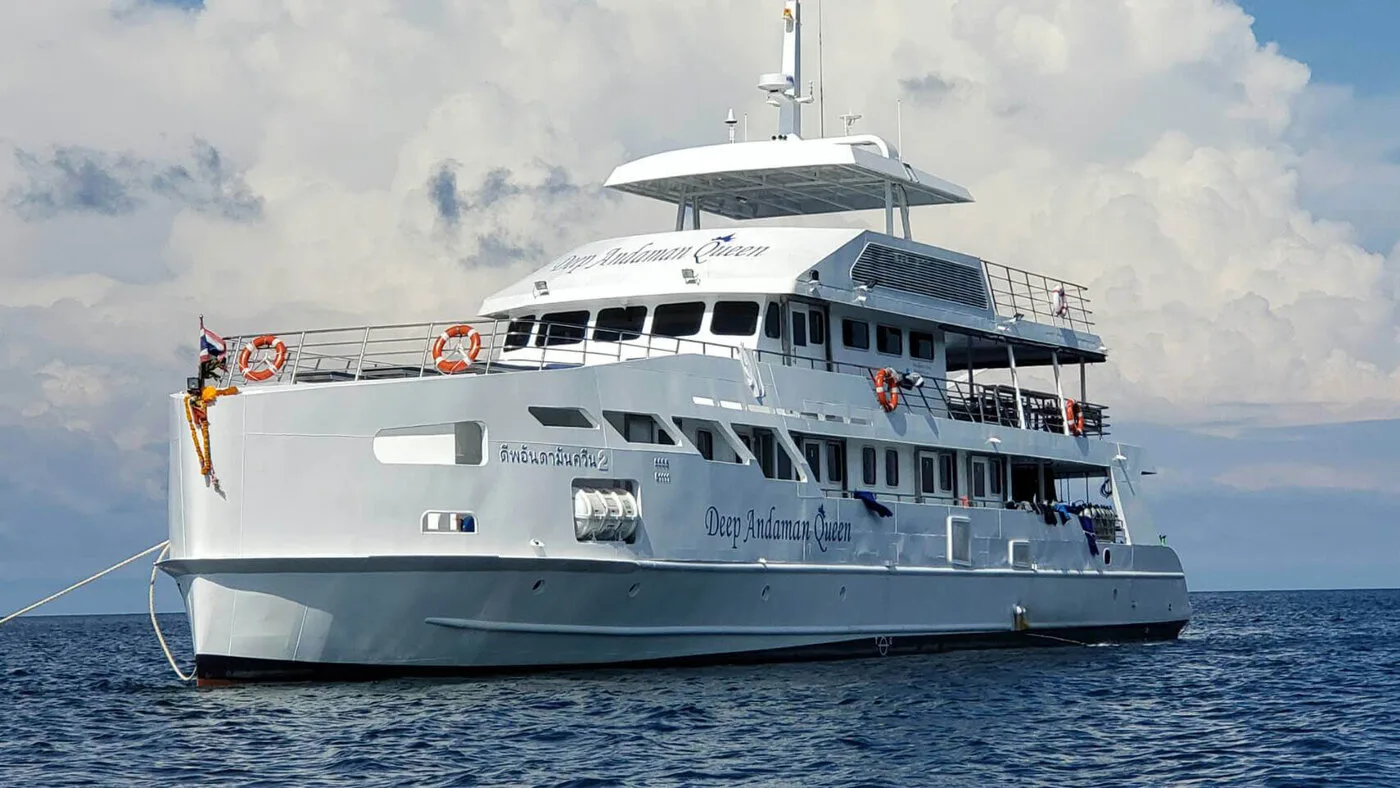 Deep Andaman Queen
See the current vessel terms in the yacht catalogue and separately priced options on the extras page.
Frequently asked questions
Do I need to be a certified diver to join a liveaboard?
No. Most liveaboards welcome snorkellers and non-diving guests, and several run Discover Scuba and Open Water courses on board. If you want to dive the deeper pinnacles, though, you will need the matching certification level.
What certification do I need for Richelieu Rock?
Richelieu Rock is an intermediate-to-advanced site reaching about 35 metres with current. Advanced Open Water (or equivalent) plus some logged dives is strongly recommended; less experienced divers can still enjoy the shallower sections with a guide.
When can I see whale sharks and manta rays?
Sightings peak from February to April, especially around Richelieu Rock, Koh Bon and Koh Tachai. They are never guaranteed — they are wild animals — but that window gives you the best odds and the calmest seas.
When is the Similan dive season?
The Similan and Surin national parks are open roughly from 15 October to 15 May and close over the southwest monsoon. The best conditions and visibility are typically from December to April.
Are there extra fees for diving in Mergui (Myanmar)?
Yes. Crossing into Myanmar's Mergui Archipelago requires a per-person government permit and marine-park fee arranged in advance and paid on top of the charter. Your operator handles the paperwork; just budget for the fee.
Do I have to bring my own dive equipment?
No. Rental gear is available on most dive boats, and Nitrox is widely offered for certified divers (often included). Many guests bring only their own mask and dive computer for comfort.
How do deposits and cancellations work?
A deposit confirms the booking with the balance due before departure. Cancellation terms depend on the specific vessel and timing; we will share the exact policy in writing before you pay.