A liveaboard is the only way to dive the best of the Andaman Sea properly — the Similans, Koh Bon, Koh Tachai and Richelieu Rock are too far offshore for a comfortable day trip. But the boats vary enormously, from no-frills bunk-bed cruisers to teak-decked luxury yachts, and the right choice depends on your certification, your budget and what you actually want to see. This guide walks you through the season, the dive sites, the boat classes and the practical details so you book the trip that fits you, not the one that fits the loudest advert.
When to go: the Similan season
Similan National Park is open to visitors only during the dry, calm northeast-monsoon window — roughly 15 October to 15 May. Outside those dates the park is closed (typically 16 May to 14 October) to protect the reefs and because the southwest monsoon makes the crossing rough and visibility poor. If a boat offers you a Similan trip in July or August, it is almost certainly heading somewhere else.
Within the season, conditions shift. November and December bring fresh, green water and fewer crowds. The real prize months are February to April, when the sea is glassiest, visibility regularly tops 25–30 metres, and the plankton blooms that draw whale sharks and manta rays peak around Richelieu Rock and Koh Bon. April is hot and busy; book cabins well ahead.
Because the season is short and the best boats sell out months in advance, the single most important planning step is to decide your dates early. Peak-season cabins on the popular vessels are often gone by the New Year.
The dive sites that should shape your choice
Richelieu Rock is the headline site of the whole Andaman — a horseshoe pinnacle far to the north, rising from about 5 to 35 metres, famous for seahorses, schooling barracuda and, in season, whale sharks and mantas. It is best dived February to April and suits intermediate to advanced divers, as currents can be strong. Only itineraries that reach this far north (often combined with Koh Tachai and Koh Bon) put it on the schedule.
Koh Bon and Koh Tachai are manta and pelagic territory: deeper pinnacles in the 12–45 metre range, current-swept, and properly an advanced diver's playground. The classic Similan islands themselves — Anita's Reef, West of Eden, Christmas Point, Elephant Head Rock, Shark Fin Reef — span everything from gentle 10-metre coral gardens to swim-through boulder fields down to 40 metres.
If you are newer to diving, the Boonsung Wreck near Khao Lak (13–20 metres) and the easy Similan reefs are forgiving and rewarding. The honest rule: choose the itinerary for the sites you can comfortably dive, then choose the boat — not the other way around.
Matching the boat to your certification
Most liveaboards welcome Open Water divers, but the standout sites do not. Richelieu Rock, Koh Bon Pinnacle and Koh Tachai involve depth and current that reward Advanced Open Water certification and a comfortable air-consumption rate. If you are freshly certified, look for a trip weighted toward the central Similan reefs, and consider doing your Advanced course on board — many boats offer it.
Non-divers and snorkellers are welcome on a good number of boats, and families can work if the operator is set up for it. Solo travellers can usually book a single berth in a shared twin cabin rather than paying a single supplement. Always confirm the diver-to-guide ratio: small groups (four guests per guide or fewer) make a real difference on busy sites.
Boat classes and what they cost
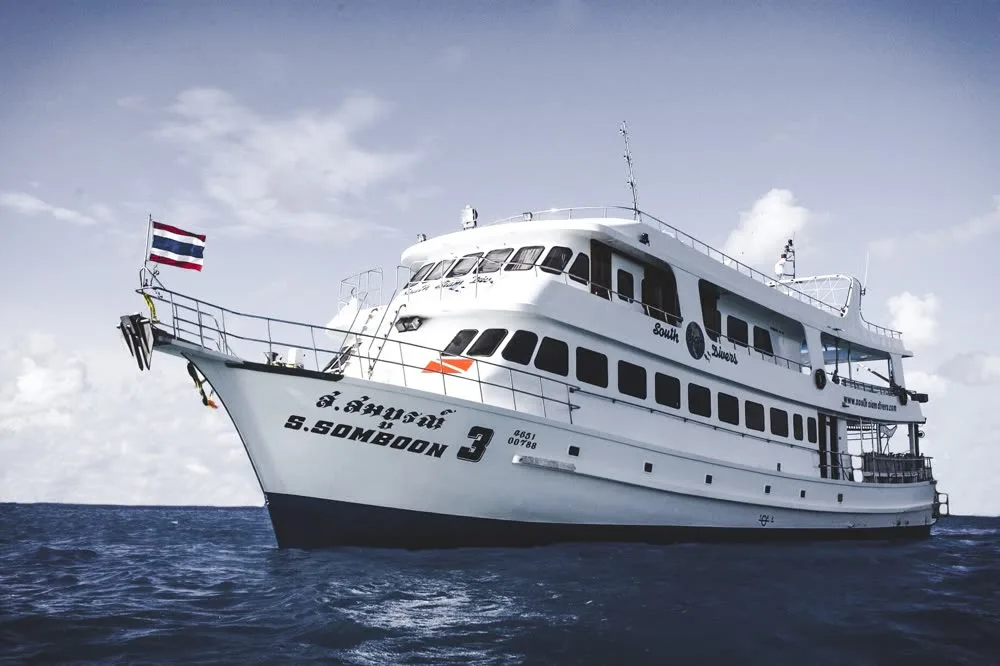
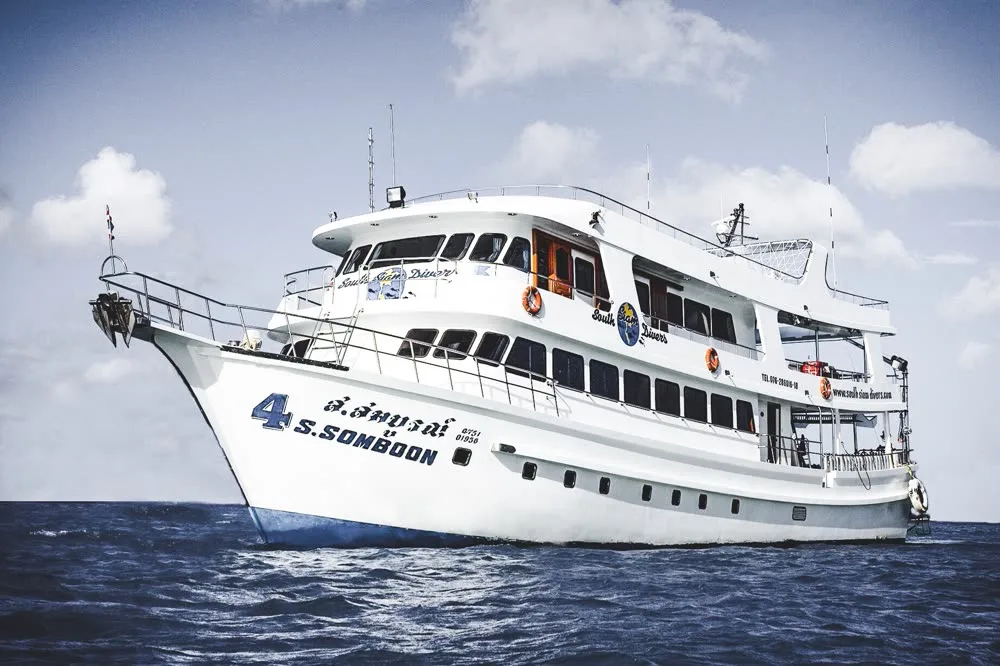
Think in three tiers. Budget steel cruisers — the Manta Queen fleet, MV South Siam 3 and 4 and similar — pack 20-plus guests into simple bunk or twin cabins and are the most affordable way onto the water; a typical 3-day/3-night Similan trip in this class sits in the lower retail bracket. They are sociable, efficient and perfect if you are there to dive, not to lounge.
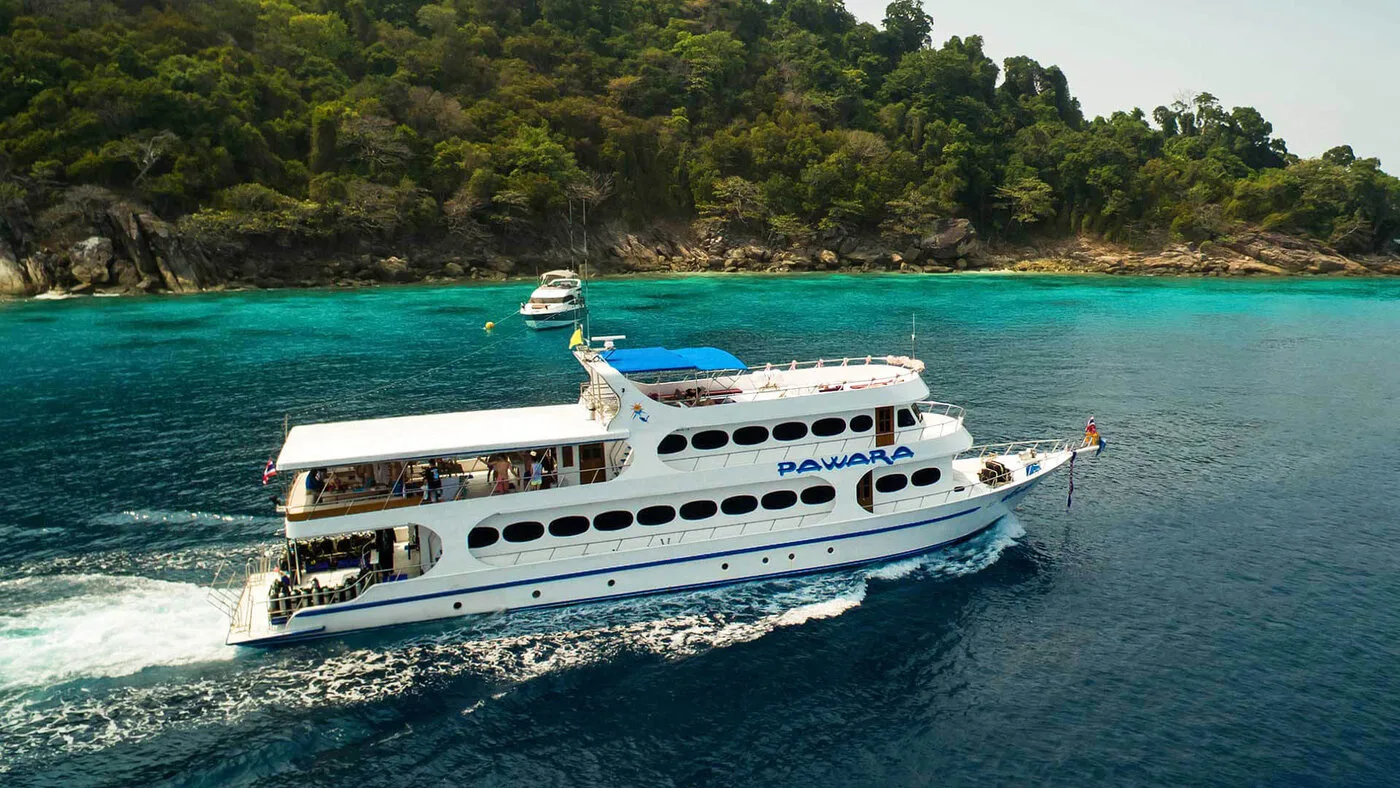
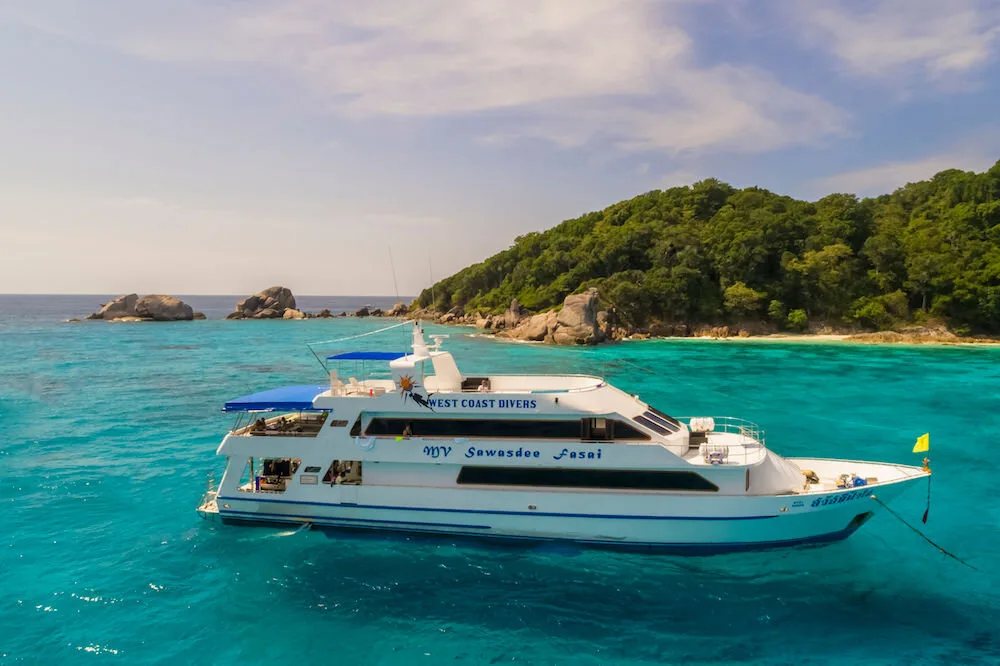
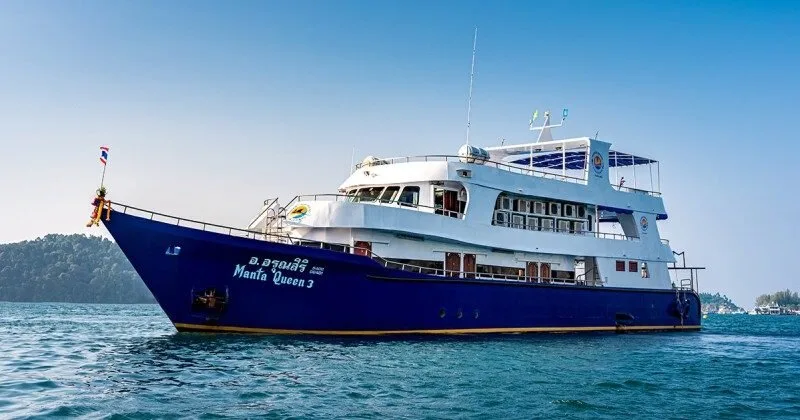
Mid-range comfort boats such as MV Pawara, MV Sawasdee Fasai and Manta Queen 3 add private en-suite cabins, air-conditioning, sundecks and better food while still keeping prices reasonable for a multi-day trip. This is the sweet spot for most divers who want a proper bed and a hot shower without paying superyacht money.
At the top end, boutique and luxury vessels carry far fewer guests in spacious cabins with high service and crew ratios, and the price reflects that. Prices vary by season, cabin type and trip length, so treat any figure as a starting point and ask for a current quote for your exact dates rather than assuming last year's rate.
Going further: Mergui (Myanmar) liveaboards
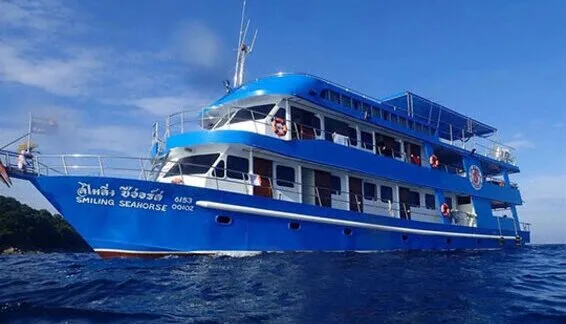
For experienced divers chasing untouched reefs, the Mergui (Myeik) Archipelago in Myanmar is the frontier — sites like Black Rock and Western Rocky, best dived February to May, with macro life, sharks and dramatic walls. Specialist boats such as The Smiling Seahorse run these longer expeditions out of the Andaman.
Mergui carries extra paperwork and cost. You will need a valid Myanmar visa, and there is a mandatory per-person government permit/diving fee charged on top of the trip price, plus immigration formalities at the border. Reputable operators handle the permit logistics for you, but factor the fee and the documentation into your budget and timeline well before departure.
Before you book: the practical checklist
Confirm what is included. The cabin fare often excludes the Similan National Park entrance and dive-tag fees, equipment rental, Nitrox and sometimes airport transfers — ask for the all-in number. Nitrox is a paid extra on most boats unless stated otherwise, and bringing your own mask and computer is wise even if full rental is available.
Check the logistics and the small print: how you reach the boat (most depart from Khao Lak or Tap Lamu, with transfers from Phuket), the deposit and cancellation policy, and whether dive accident insurance (DAN or equivalent) is required — it usually is, and it is cheap peace of mind. Finally, if you are prone to seasickness, pick a larger, more stable vessel and come prepared for the open crossing to Richelieu Rock.
Featured vessels for this trip
Frequently asked questions
When is the Similan liveaboard season?
The Similan Islands National Park is open roughly 15 October to 15 May and closed for the rest of the year. The calmest water and best visibility, along with the peak whale-shark and manta season, fall between February and April.
Do I need to be an advanced diver?
Open Water divers are welcome on most boats and can enjoy the central Similan reefs. The signature sites — Richelieu Rock, Koh Bon and Koh Tachai — involve depth and current, so they suit Advanced Open Water divers. Many boats let you take your Advanced course on board.
When can I see whale sharks and manta rays?
There is never a guarantee, but your best odds are February to April, when plankton blooms peak around Richelieu Rock and Koh Bon. Sightings are seasonal and weather-dependent, so build in a little luck.
Is Nitrox included for free?
Usually not. On most liveaboards Nitrox is a paid add-on, and it requires Nitrox certification. A few premium trips include it — always check what your fare covers before booking.
What are the Similan national park fees?
The national park charges entrance and daily dive-tag fees, which are frequently quoted separately from the cabin price. Ask your operator for the all-inclusive total so there are no surprises at check-in.
Do I need extra permits for a Mergui (Myanmar) trip?
Yes. Mergui requires a valid Myanmar visa plus a mandatory per-person government permit and diving fee paid on top of the trip price, with immigration formalities at the border. Good operators arrange the permit, but budget for the cost and the paperwork lead time.
Can solo travellers and non-divers come along?
Yes. Solo divers can usually book a single berth in a shared twin cabin to avoid a single supplement, and many boats accept snorkellers and non-divers — confirm the boat is set up for them before you book.