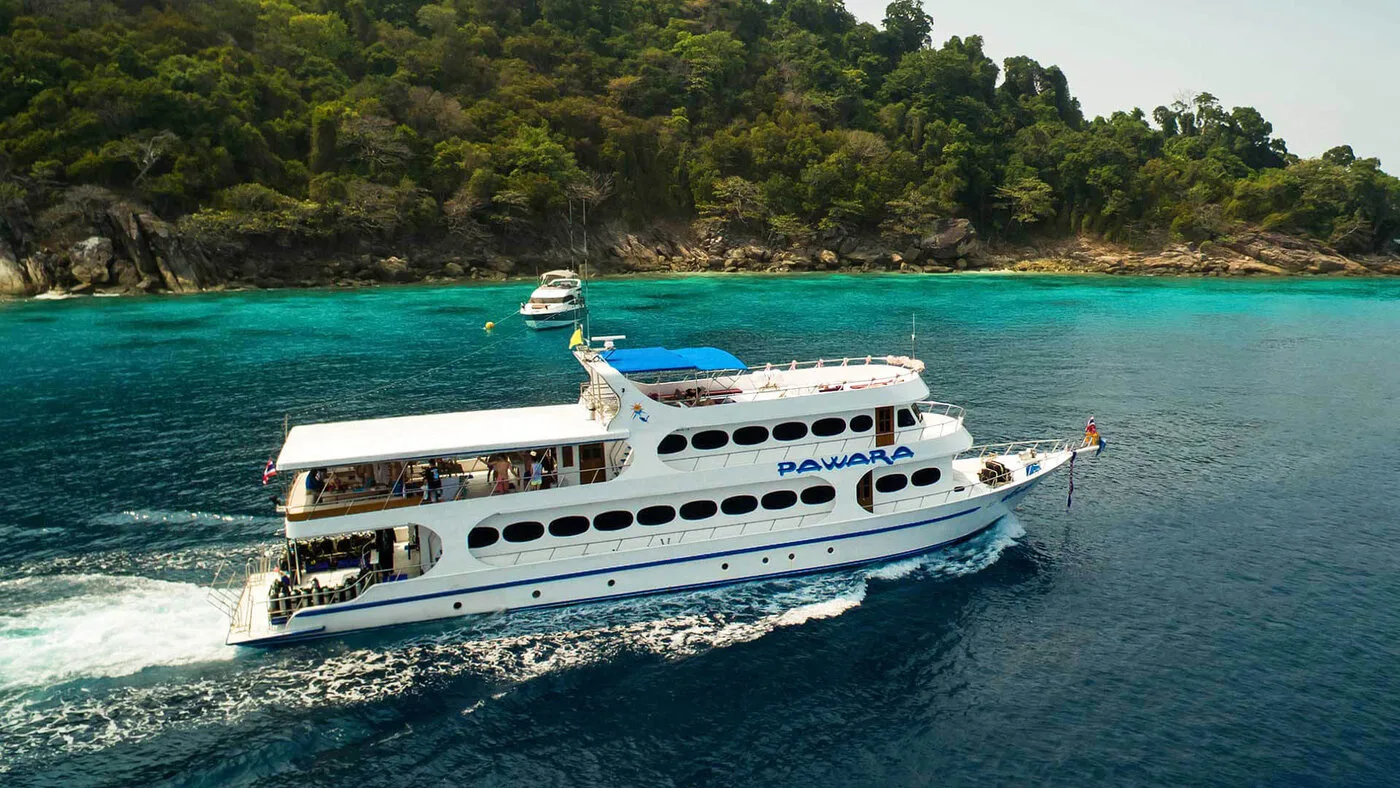
The Surin Islands sit in the far north of the Thai Andaman Sea, close to the Myanmar border and well beyond the reach of any Phuket day boat. Protected as Mu Ko Surin National Park, the group is famous for two very different things: some of the shallowest, healthiest fringing coral reefs in Thailand, ideal for snorkellers and easy diving, and its role as the gateway to Richelieu Rock, the legendary pinnacle that draws divers from around the world. You reach the Surins by liveaboard, usually on a Similan-and-Surin itinerary out of Khao Lak with a transfer from Phuket. This guide covers the reefs, Richelieu Rock, the best season, depths by experience level and what a liveaboard realistically costs.
Where are the Surin Islands?
The Surin Islands are a cluster of five islands in the northern Andaman Sea, roughly 60 km offshore from the mainland and only a short distance from the maritime border with Myanmar. Together with the waters around them they form Mu Ko Surin National Park, one of the most protected and least developed marine areas in Thailand.
Because they lie so far north and so far offshore, the Surins are not a day trip from Phuket. Realistically you visit them on a liveaboard, almost always a Similan-and-Surin itinerary that departs from Khao Lak north of Phuket, with a road transfer from Phuket or the airport included. That isolation is exactly why the reefs are in such good shape and why the diving feels a world away from the busier inshore sites.
The two main islands, Koh Surin Nuea and Koh Surin Tai, shelter calm bays and a Moken sea-gypsy village, while the surrounding reefs and the open-water pinnacle of Richelieu Rock to the east are the reason divers and snorkellers make the trip.
Snorkeling and the shallow reefs
The Surin Islands are widely considered the best snorkelling destination in Thailand. The fringing hard-coral reefs grow in clear, shallow water, often just a metre or two below the surface, so you float directly over dense coral gardens rather than peering down into the deep.
These shallow reefs hold reef fish in huge numbers, plus the occasional sea turtle, reef shark and, in season, larger visitors passing through. The sheltered bays around the two main islands stay calm in most conditions, which makes the Surins genuinely comfortable for families, non-divers and anyone happier on the surface than below it.
For divers, the same reefs make relaxed, shallow fun dives and an easy warm-up before the more demanding open-water sites. Visibility is usually very good in the dry season, and the gentle profiles suit Open Water divers and those rebuilding confidence after a break.
Richelieu Rock and the open-water diving
Richelieu Rock, about 18 km east of the Surin Islands, is the headline dive of any Surin trip and one of the top sites in Southeast Asia. It is a horseshoe-shaped limestone pinnacle in the open sea, carpeted in purple and pink soft coral, with schooling barracuda and trevally in the blue and the chance, never the promise, of a whale shark or manta.
Richelieu is a multi-level dive from around 5 metres down to roughly 35 metres, and most dives are run as drifts that circle the pinnacle. Currents can be mild or genuinely strong and may change during a dive, which is why the site is rated intermediate to advanced. Good buoyancy and some comfort in current make all the difference, and the best window for visibility and big-animal sightings is February to April.
Many Similan-and-Surin liveaboards also dive the granite pinnacles of Koh Bon and Koh Tachai on the Similan side of the route, both deeper, current-swept sites known for manta rays. Specialist boats that continue north across the border add the wilder Mergui (Myeik) sites such as Black Rock and Western Rocky in Myanmar, which carry separate permits and fees on top of the charter.
Best time to dive the Surin Islands
The diving season in the Surin and Similan marine parks runs roughly from mid-October to mid-May. Outside that window the parks close for the southwest monsoon, the open sea gets rough and liveaboards stop running, so any Surin trip has to fall inside the dry season.
Within the season, February to April is the prime window. The sea is calmest, visibility is at its best and this is when whale sharks and manta rays are most often reported around Richelieu Rock, Koh Bon and Koh Tachai. Plankton blooms that draw the big animals can occasionally soften visibility, but that trade-off is part of why divers travel here at all.
The better boats sell out their peak February-to-April cabins months ahead, so if those dates matter to you, book early. Early and late in the season the parks are quieter and prices are often softer, with diving that is still excellent on the sheltered reefs.
Choosing a liveaboard for the Surins
Because the Surin Islands and Richelieu Rock are liveaboard-only, your experience depends heavily on the boat. Most itineraries that include the Surins run 4 days and 4 nights from Khao Lak, combining the Similans, Koh Bon, Koh Tachai, the Surin reefs and Richelieu Rock, with a transfer from Phuket included. Expect three to four dives a day, including a night dive, and a crew that knows how to time Richelieu around the current and the day-boat crowds.
The price follows the selected boat, cabin, departure and itinerary rather than a general fleet-wide range. Confirm the number of days and dives, transfers, meals, park fees, equipment and Nitrox in the quotation. If no current published rate applies to your departure, pricing is on request.
Snorkellers and non-diving companions are welcome on many boats, and the shallow Surin reefs are some of the best snorkelling in the country, so mixed dive and non-dive groups work well here. If you want to push further into the Mergui Archipelago in Myanmar, a handful of specialist boats run longer trips that add a per-person government permit and marine-park fee.
Tell us your certification level, your dates and your budget and we'll match you to a boat that actually fits, from family-friendly group liveaboards to small premium vessels.
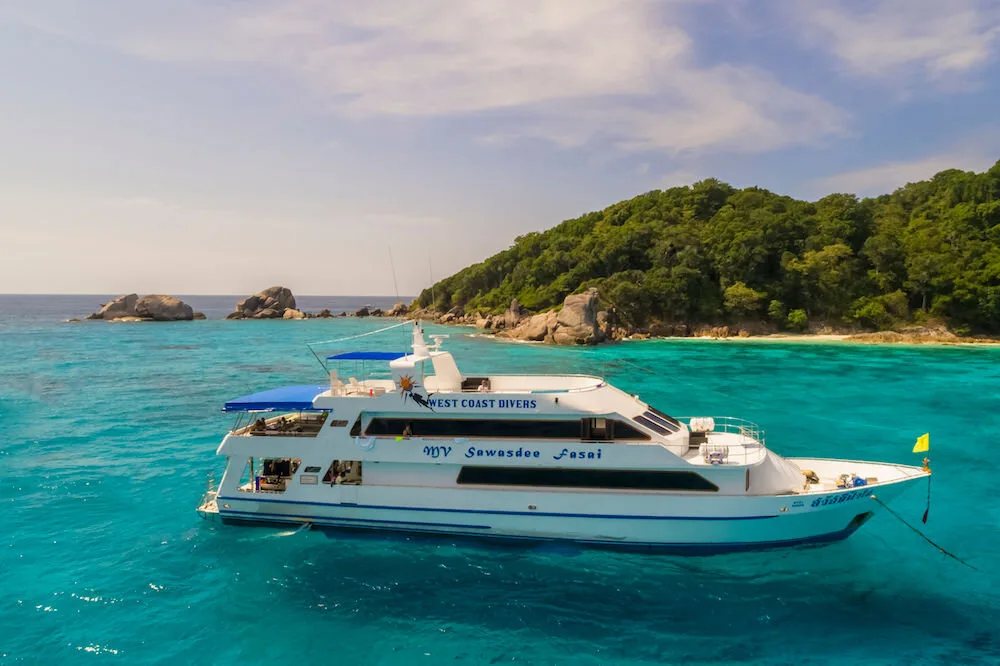
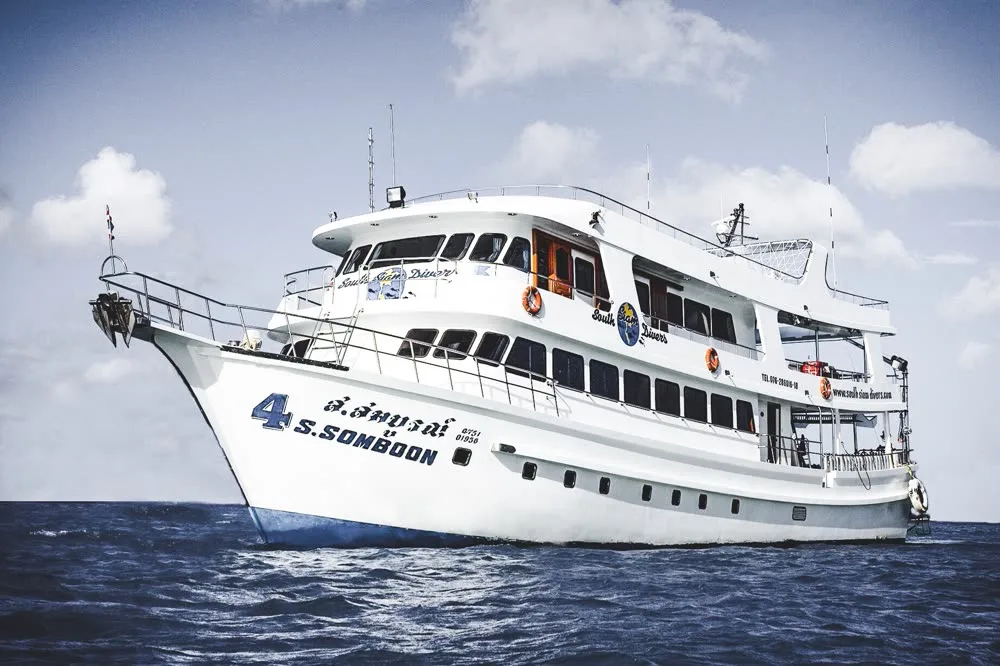
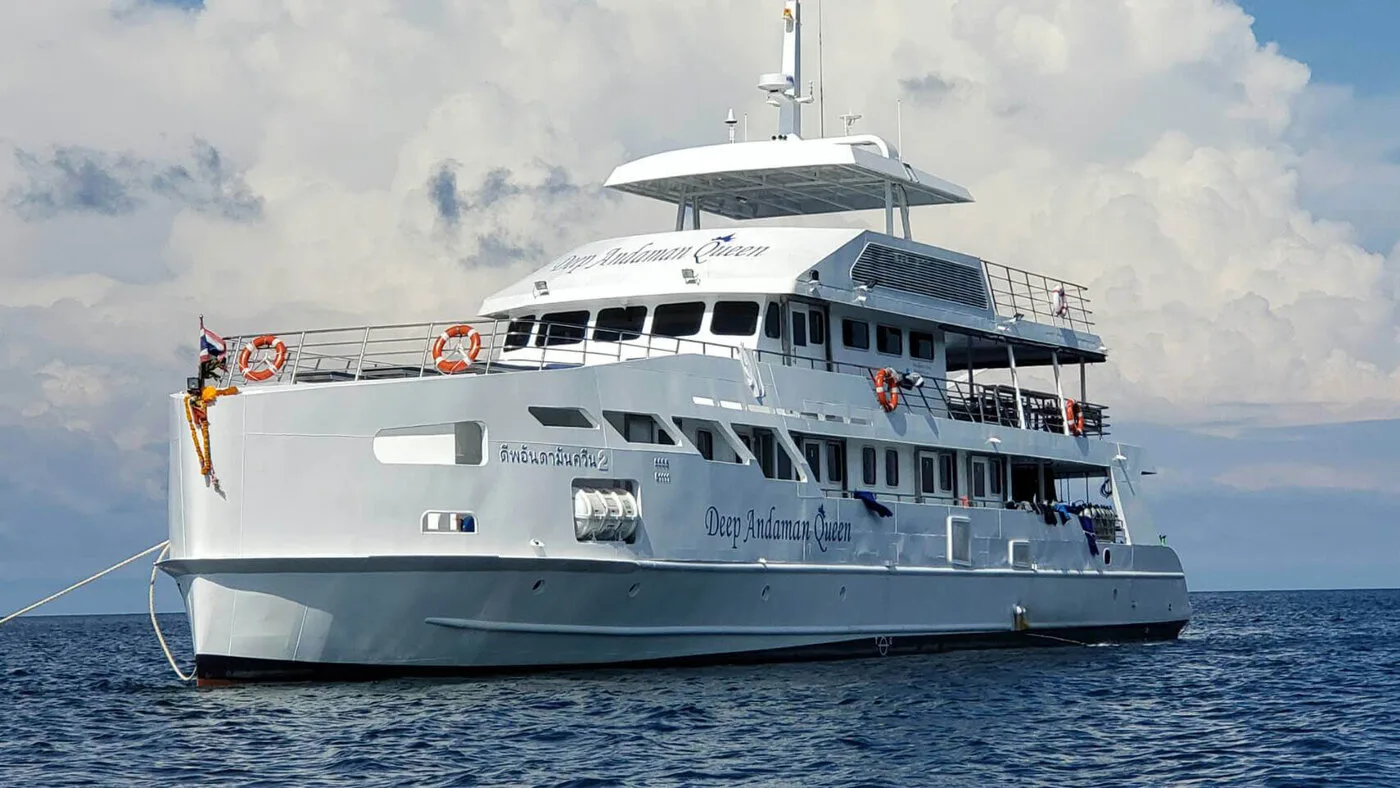
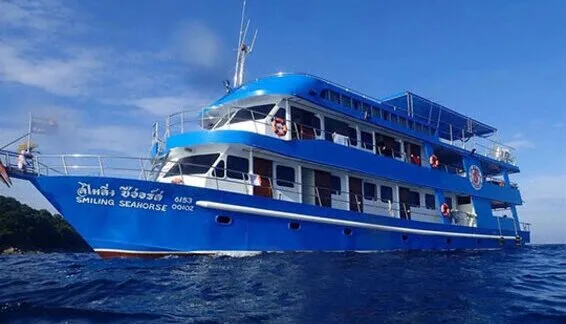
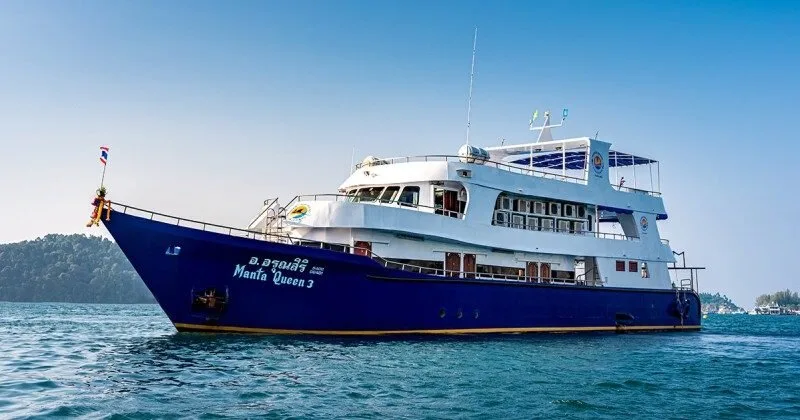
Featured vessels for this trip
Frequently asked questions
Can you visit the Surin Islands on a day trip from Phuket?
Not realistically. The Surin Islands lie in the far north Andaman near the Myanmar border, well beyond day-boat range from Phuket. They are visited by liveaboard, almost always a Similan-and-Surin itinerary departing from Khao Lak with a transfer from Phuket included.
Are the Surin Islands good for snorkeling and non-divers?
Yes, they are arguably the best snorkelling in Thailand. The fringing hard-coral reefs sit in shallow, clear water just below the surface, and the sheltered bays stay calm in most conditions, so families, non-divers and snorkellers are very well catered for, not just scuba divers.
What level do I need to dive the Surins and Richelieu Rock?
The shallow Surin reefs suit Open Water divers and relaxed fun dives. Richelieu Rock is rated intermediate to advanced because currents can be strong and change during the dive, so Advanced Open Water plus some logged dives is the comfortable minimum there. Newer divers can enjoy the reefs and build up to the pinnacles.
When is the best time to dive the Surin Islands?
The marine-park season runs from about mid-October to mid-May. February to April is the prime window, with the calmest seas, best visibility and the best chance of whale sharks and mantas at Richelieu Rock, Koh Bon and Koh Tachai. The parks close for the monsoon outside that window.
How deep is the diving at the Surin Islands?
The Surin fringing reefs are mostly shallow, from a metre or two down to around 25 metres. Richelieu Rock is a multi-level dive from roughly 5 to 35 metres, so you can stay shallow around the pinnacle or work the deeper sections if you are experienced.
How much does a Surin Islands liveaboard cost?
The trip is quoted for your boat, cabin, dates and itinerary. We confirm the duration, dives and included services, plus any park fees, equipment, Nitrox or transfers charged separately, before you book.