Once you've decided to take a whole boat for your own group, the next question is what kind of boat. In Phuket the choice almost always comes down to two families: the catamaran — wide, stable and laid-back — and the motor yacht — sleek, fast and polished. They cruise the same turquoise water and anchor off the same islands, but they feel completely different on board. This guide walks through space, stability, speed, cost and the kind of day each one is built for, so you charter the boat that matches your group.
The honest difference between the two hulls
A catamaran rides on two hulls with a broad deck bridging them, so it sits flat on the water and gives you an enormous amount of usable space for its length. A 40–56 ft cat like the Leopard 40 Shibuli, Estrella (Leopard 43) or the Lagoon 560 feels far bigger than the number suggests — big shaded cockpit, a flat foredeck and trampolines for sunbathing, and a saloon on the same level as the deck. That layout is why families and mixed groups who want to spread out and relax tend to gravitate to catamarans.
A motor yacht rides on a single planing or semi-displacement hull. It trades some deck width for speed, a deeper interior and a more enclosed, hotel-like feel — think the Princess 60 Mayavee, the Sunseeker Manhattan 66 or the Galeon 500 Fly. You get proper air-conditioned cabins below, a flybridge up top, and the ability to cover distance quickly when the sea is kind. For couples and groups who care about pace, polish and getting somewhere fast, the motor yacht is the natural pick.
Neither is objectively better. A catamaran is about space, shade and steadiness; a motor yacht is about speed, range and a sharper finish. The right answer depends on who is coming and what kind of day you want.
Stability, seasickness and time at anchor
This is where the catamaran genuinely wins for many guests. Two hulls give it a wide stance, so it barely rolls at anchor and stays remarkably level underway. If you're bringing children, older relatives, or anyone who feels queasy on boats, a cat is the gentler ride — lunch on a flat table, no clinging to handrails, and easy steps down to a swim platform between the hulls.
A motor yacht is stable too, but a single hull will roll a little more when it's sitting beam-on to a swell at a lunch stop. Most Phuket day-trip waters are sheltered, so this rarely becomes a problem in the calm season — but it's a real consideration if anyone in your party is sensitive.
If your day is mostly anchoring in pretty bays — swimming, paddleboarding, long lazy lunches — the catamaran's steadiness and shaded deck space are hard to beat. If your day is about moving between several spots and spending more time underway, the motor yacht's hull comes into its own.
Speed, range and the day-trips each one suits
A typical cruising catamaran moves at a relaxed pace, so it's ideal for nearer day-trips: Phang Nga Bay's limestone karsts and sea caves, the Coral and Maiton islands just south of Phuket, or a gentle loop around the Racha (Raya) islands with their clear, snorkel-friendly water — generally in the 5–30 m reef range that suits casual swimmers and freedivers.
A motor yacht's speed opens up more of the map in a single day. The Phi Phi islands, the further Racha anchorages, or a fast hop out and back with time to spare are all comfortable on a planing hull. If your group wants to reach a more distant beach, anchor, and still be back for sunset, the extra knots matter.
For multi-day cruising both work beautifully — a catamaran for a slow, sociable few days island-hopping, a motor yacht when you want to range wider. Phuket's calm, high-season window runs roughly November to April under the northeast monsoon; the green low season (May to October, southwest monsoon) brings more wind and swell, which again nudges the choice toward a steady catamaran on breezier days.
Space, group size and the right boat for your party
For overnight cruising, both catamarans and motor yachts in this size class typically sleep around 6 to 10 guests in en-suite cabins — the Lagoon 560 and Fountaine Pajot MY40 are good examples on the cat side, the Princess 60 and Sunseeker Manhattan 66 on the motor side. Cabin counts are similar; what differs is the living space around them.
For day charters the picture changes. Wide-deck day catamarans are built to host larger groups comfortably — boats like Estrella and the Leopard 53 take 18 to 35 guests for a day out, with shaded lounging, a big swim platform and room for everyone to find their own corner. A motor yacht of the same length usually carries a smaller, more intimate group but delivers a more luxurious, finished feel.
A simple rule of thumb: bigger or more relaxed groups, and anyone prioritising shade and steadiness, lean catamaran. Smaller groups who want speed, privacy and a high-gloss interior lean motor yacht.
What it costs to charter each one
A catamaran offers a different layout and cruising pace, but its price depends on the actual vessel, date, route, charter duration and guest count. Compare the whole-boat quotation and its inclusions, rather than assuming a standard price for every catamaran.
Motor-yacht rates also depend on the individual vessel and programme. Speed, fuel allowance, cabins, service and any overnight arrangements affect the quotation. A faster yacht can suit a longer itinerary, while a catamaran may suit a more relaxed day; compare both for the same route and group.
All figures are starting ranges and move with season, route and the exact vessel — fuel for a fast motor yacht, for instance, is a larger share of the day than on a relaxed catamaran. Send us your dates, group size and the islands you'd like to see, and we'll match you to the right boat and a firm quote.
Featured vessels for this trip
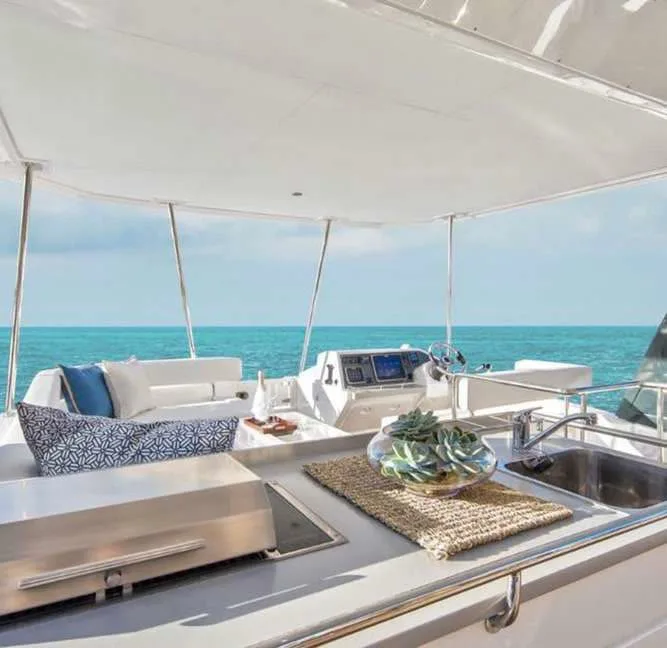 Estrella · Leopard 43
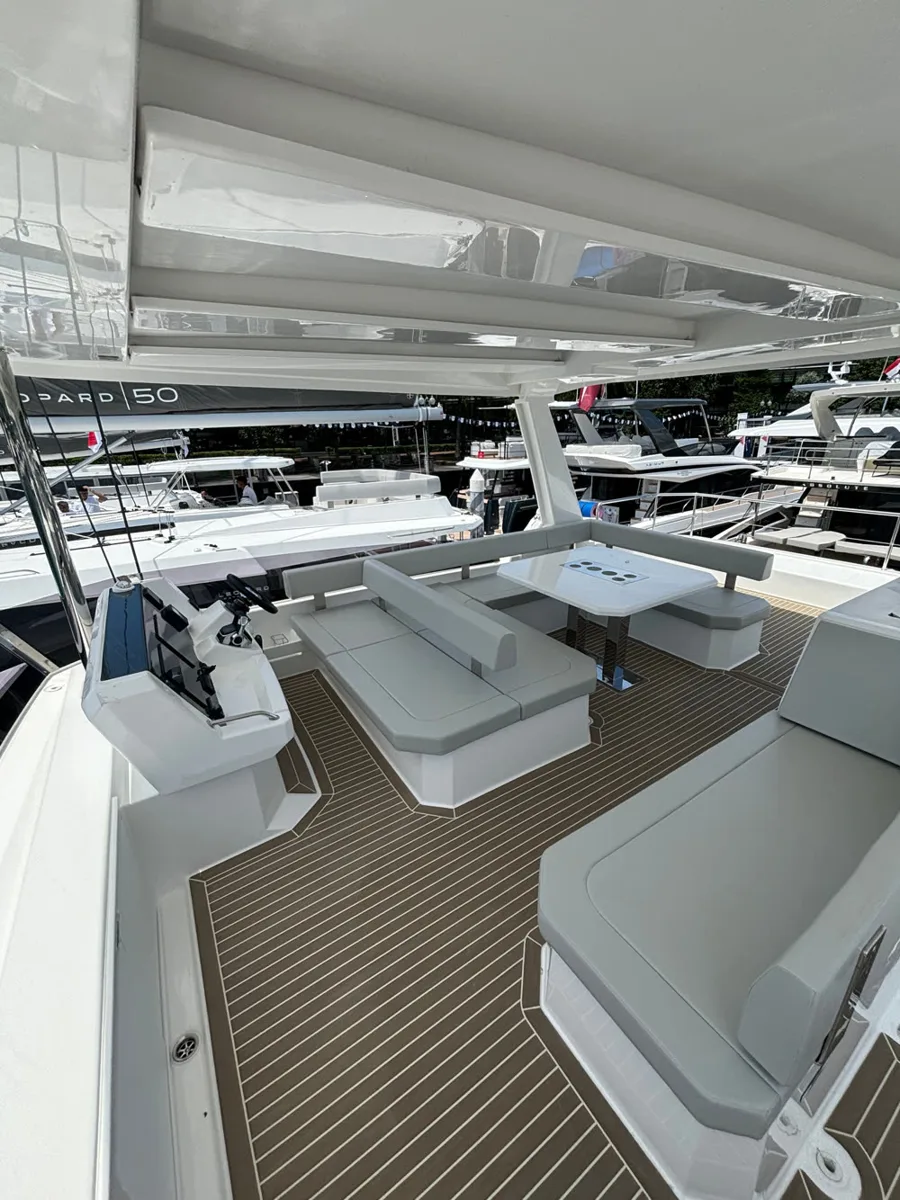 Shibuli · Leopard 40
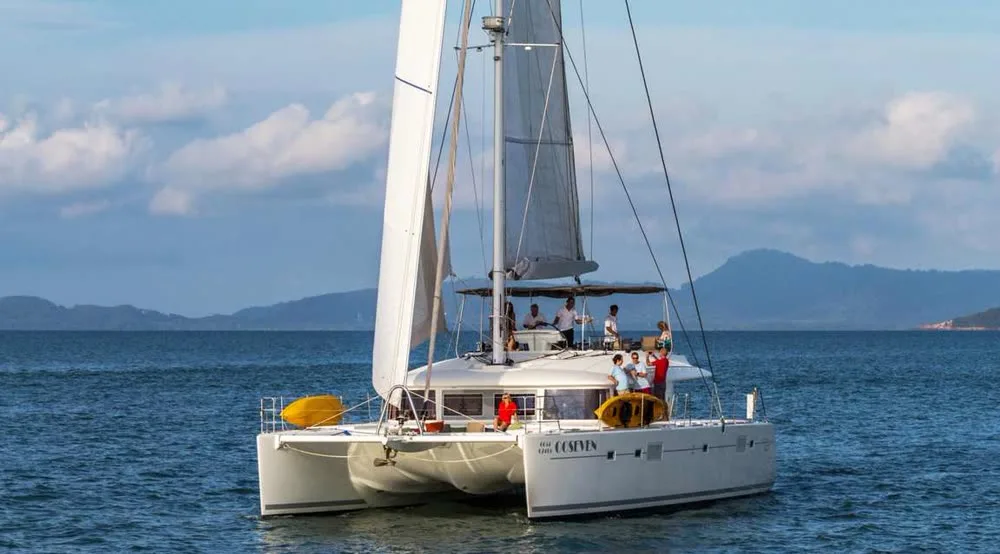 Lagoon 560
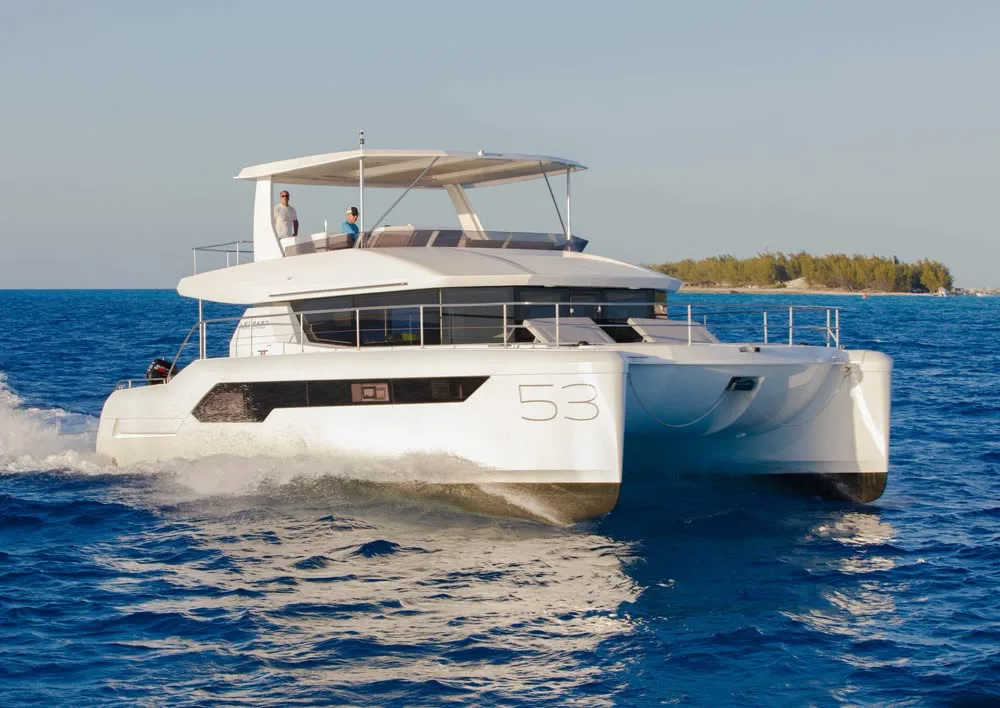 Leopard 53 · Leopard 53 Powercat
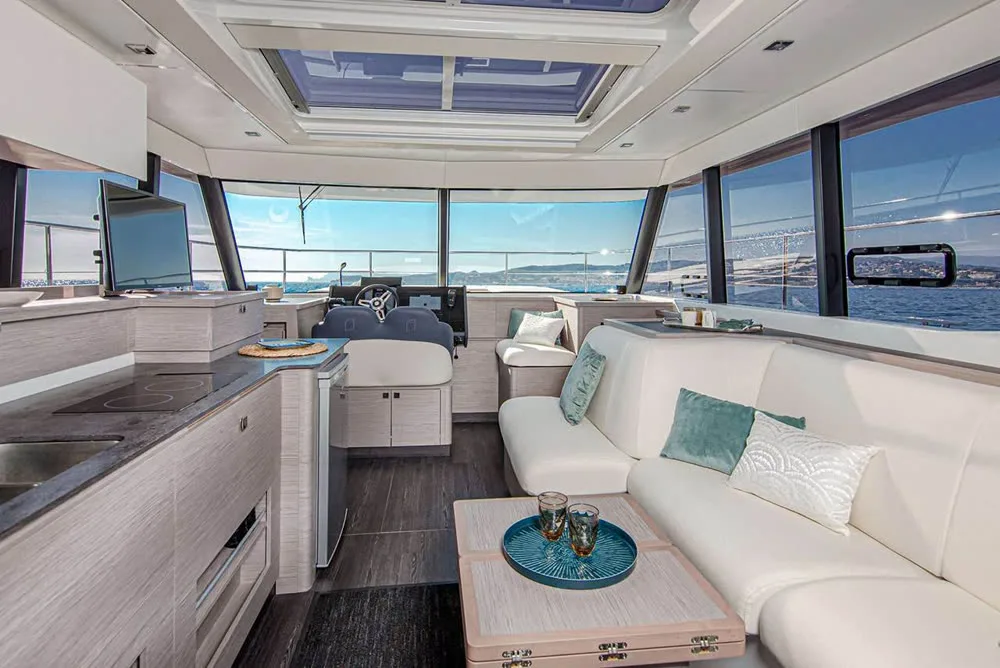 Fountaine Pajot MY40
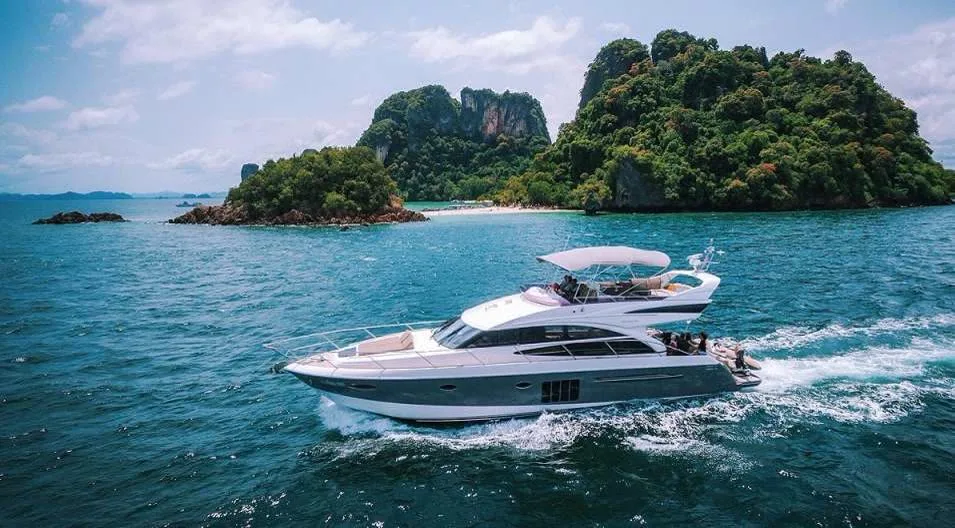 Mayavee · Princess 60
Frequently asked questions
Is a catamaran or a motor yacht better for seasickness?
A catamaran. Its two hulls give a wide, stable stance, so it rolls far less at anchor and stays level underway. If you're bringing children, older guests or anyone prone to seasickness, a cat is the gentler, steadier choice — especially on breezier low-season days.
Which is faster for Phuket day-trips?
The motor yacht. A planing hull cruises noticeably faster than a cruising catamaran, so you can reach further spots like the Phi Phi islands or distant Racha anchorages and still be back for sunset. Catamarans are better suited to nearer destinations such as Phang Nga Bay, Coral Island and Maiton.
Which holds a bigger group?
For day charters, wide-deck catamarans win — boats like Estrella or the Leopard 53 comfortably host 18 to 35 guests for the day. For overnight cruising both types usually sleep around 6 to 10 in en-suite cabins, so the difference there is living space and shade rather than bed count.
Is a catamaran cheaper than a motor yacht?
There is no fixed price advantage for every boat or group. Compare current quotations for the same date, itinerary, duration and guest count, including fuel, catering, transfers and any extra fees. Divide the confirmed whole-boat total by your actual number of guests.
When is the best time to charter in Phuket?
The calm high season runs roughly November to April, with light winds and flat water — ideal for both boat types. The green low season (May to October) brings more wind and swell, which makes a steady catamaran the more comfortable option on choppier days.
Can I do an overnight trip on either?
Yes. Both catamarans and motor yachts in this class offer en-suite cabins for multi-day cruising. Choose a catamaran for a slow, sociable few days of island-hopping with maximum deck space, or a motor yacht when you want to range wider and faster between anchorages.