When you plan a diving or cruising trip out of Phuket, the first real decision isn't the boat — it's how you book it. You can buy a single berth (a bed in a shared cabin on a scheduled liveaboard) and join a mixed group of strangers, or you can charter the whole boat exclusively for your own party. Both options sail the same blue water and reach the same reefs, but they suit very different travellers, budgets and moods. This guide breaks down the trade-offs so you book the trip you actually want.
What "by the berth" actually means
Booking by the berth means you pay per person for one bunk on a fixed-date departure. The vessel runs to a published schedule, the dive guides and crew are already in place, and you share the saloon, deck and dive deck with other guests — typically anyone from a handful of divers up to 20 or more, depending on the boat.
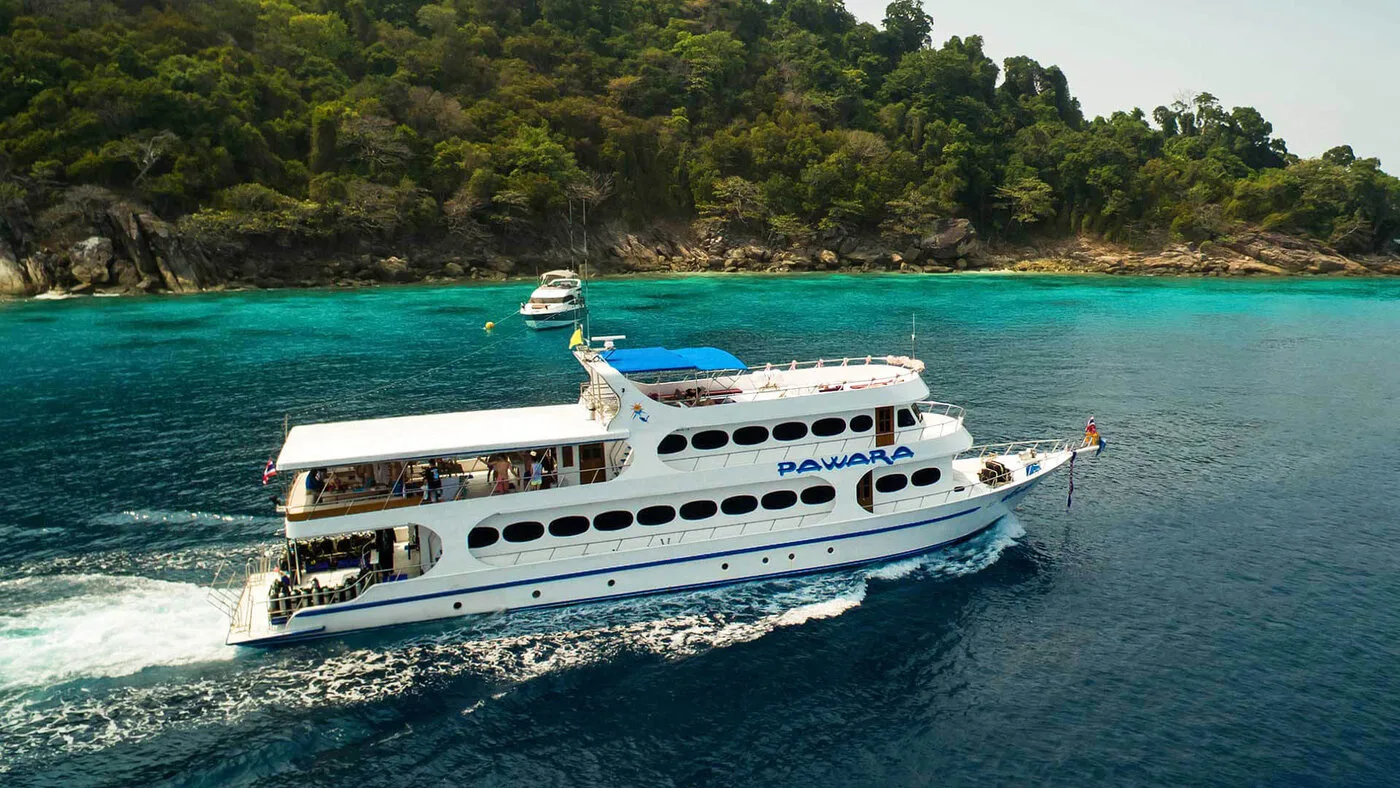
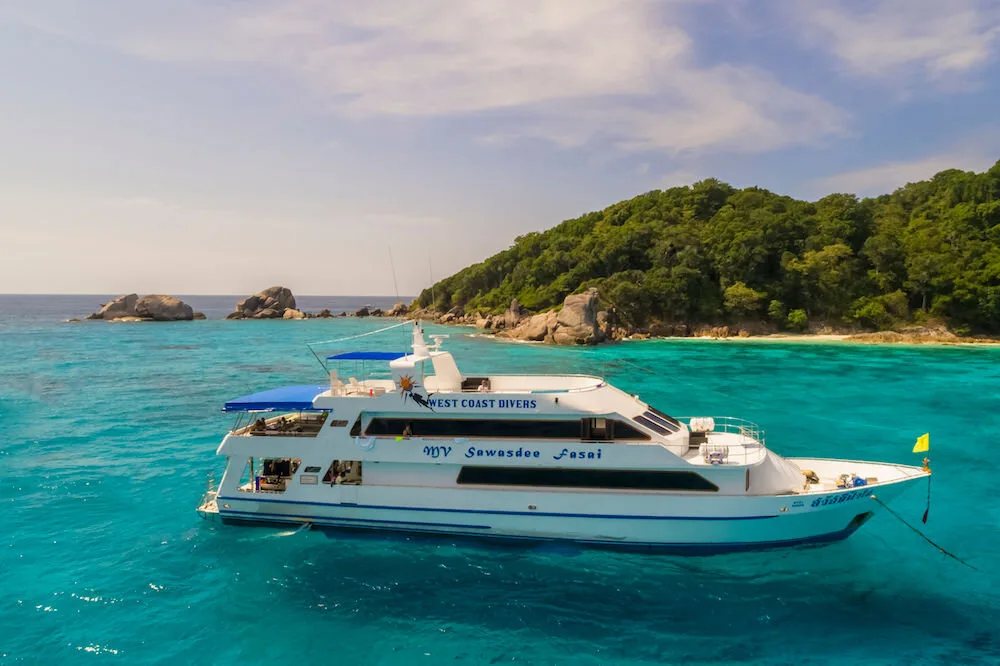
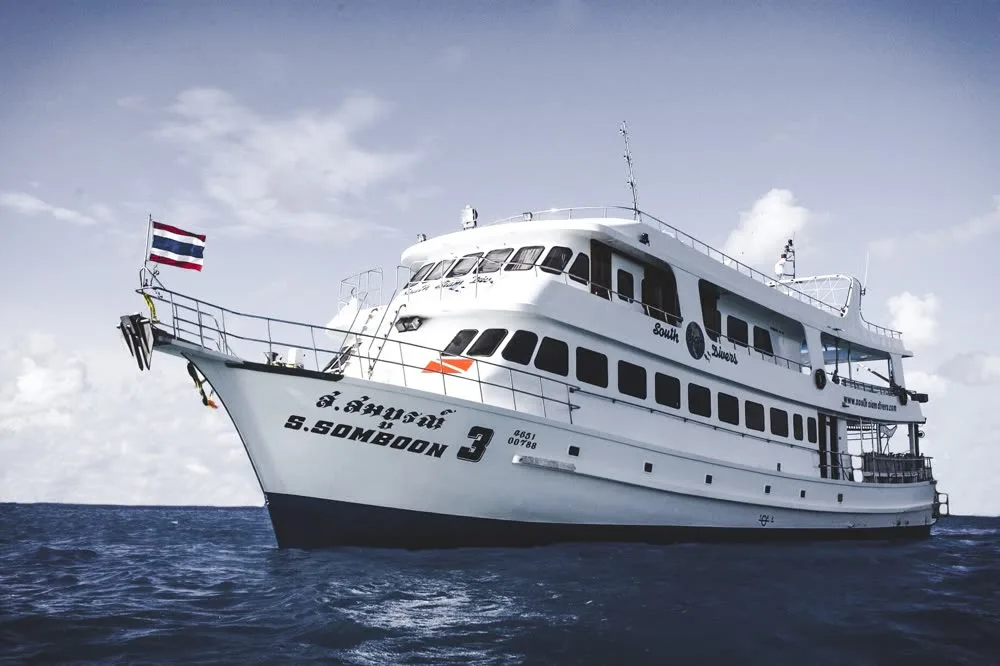
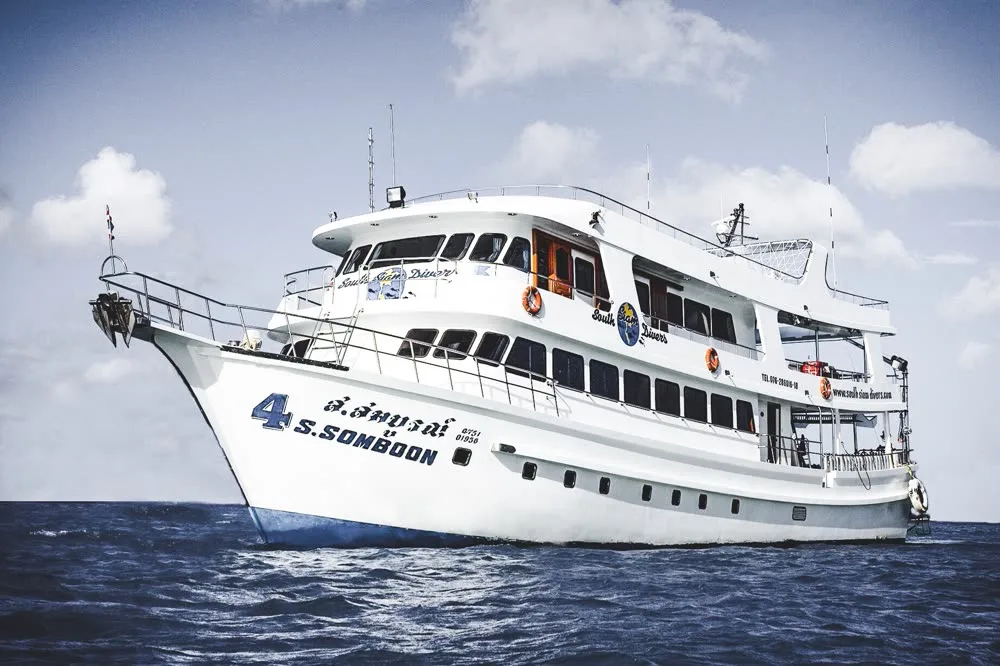
This is the classic liveaboard model on boats like MV Pawara, MV Sawasdee Fasai and the MV South Siam fleet. You pick a departure date and an itinerary — most often a multi-day Similan and Surin run — and the operator fills the remaining cabins. Solo travellers can usually request a same-sex cabin share to avoid a single-occupancy supplement.
The appeal is straightforward: the per-person cost is far lower than taking a boat for yourselves, the dive operation is professional and well-rehearsed, and you meet like-minded divers from around the world. The trade-off is fixed dates, a shared schedule, and less control over who else is on board.
What chartering the whole boat gets you
A whole-boat charter means the vessel sails only for your group. You set the guest list, and within reason you shape the route, the pace, the menu and the daily rhythm. Want a lazy late start, an extra hour at a favourite reef, or a sunset anchorage with no one else aboard? That flexibility is the whole point.
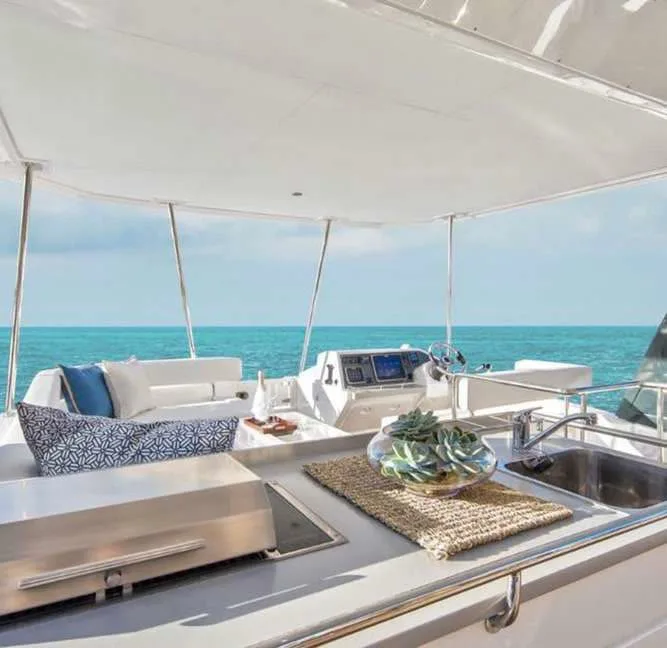
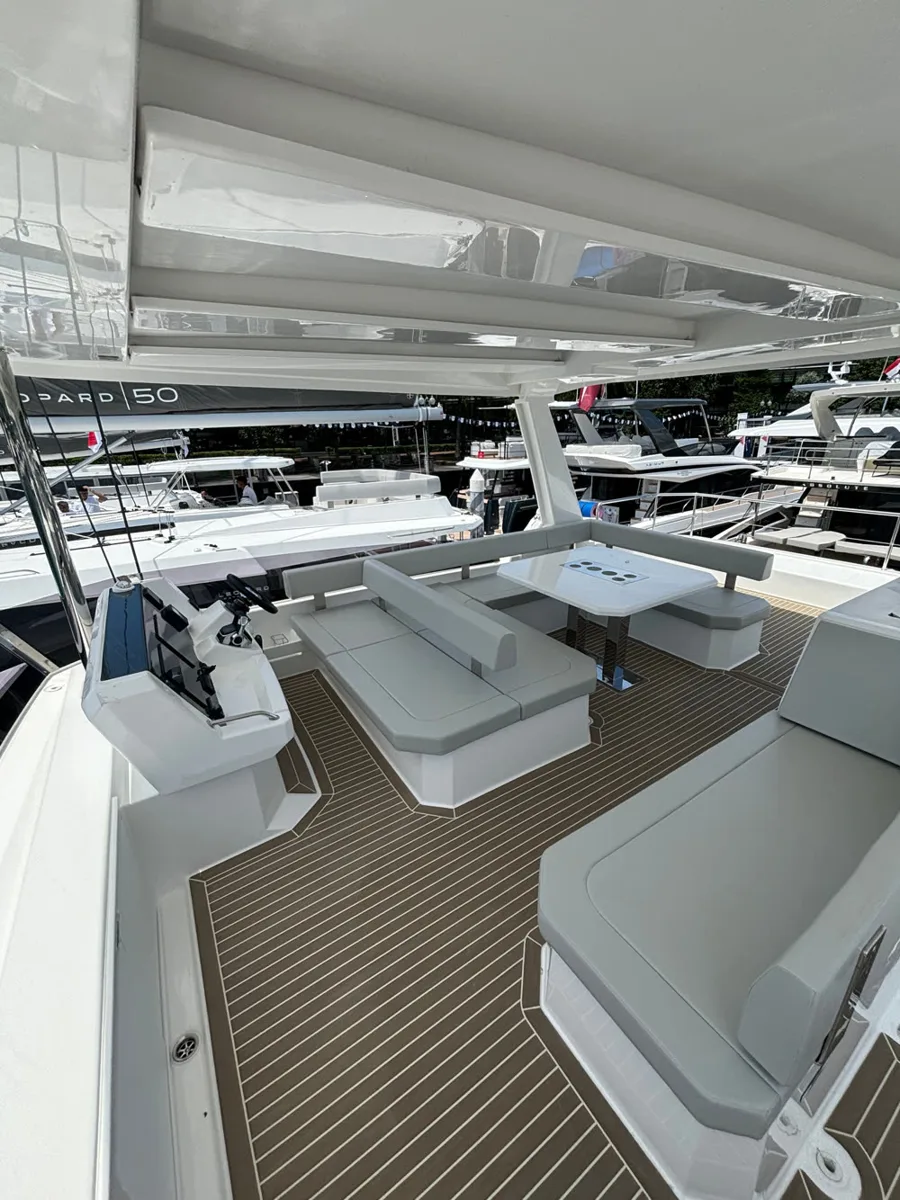
Private charters span everything from a sailing catamaran such as Estrella · Leopard 43 or Shibuli · Leopard 40 for a family or group of friends, up to crewed motor yachts and dedicated dive liveaboards taken exclusively. Because you are paying for the entire vessel and crew, the headline price is naturally higher — but split across a full group, the per-person figure can land surprisingly close to a premium berth fare.
Whole-boat charters reward groups that already know each other: a family, a dive club, a company offsite, a birthday or a wedding party. You trade the social mix of a shared liveaboard for privacy, control and a trip built around your people rather than a fixed manifest.
Cost: how to compare honestly
The simplest way to compare is per person, all-in. Add up what each guest pays on a berth — fare plus extras — and set it against the whole-boat price divided by your real headcount. Small groups of two to four almost always come out ahead buying berths; once you reach a full group that can fill most or all of the cabins, a private charter starts to make sense and buys you privacy on top.
Build any extras into the comparison. National-park fees, equipment rental, Nitrox, drinks and transfers depend on the boat and itinerary. Ask for a written breakdown of what is included, what is charged separately and the payment currency before comparing the total per guest.
Prices move with the season and the vessel, so treat any number you see online as a starting point rather than a quote. The most reliable figure is a current, dated quote from the operator for your exact dates and group size — message us on WhatsApp and we'll price both options side by side so you can see the real difference for your trip.
The dive sites you're actually paying for
The Andaman's headline reefs are the same whether you book a berth or the whole boat. Richelieu Rock — best from February to April and pitched at intermediate to advanced divers across 5–35 m — is the regional showpiece, famous for seahorses, schooling fish and seasonal whale-shark and manta encounters. Nearby Koh Bon and Koh Tachai pinnacles drop to 40 m and beyond and are firmly advanced sites with strong currents.
For newer divers, the Similan reefs are gentler: Anita's Reef (10–35 m) is a relaxed beginner site, while West of Eden and the Boonsung Wreck (13–20 m) suit beginner-to-intermediate divers and make great early dives in a multi-day trip. Most Similan and Surin itineraries run from roughly mid-October to mid-May, while the marine parks are closed in the low-season monsoon months.
If you want the wilder, less-trafficked end of the Andaman, the Mergui Archipelago in Myanmar delivers it. Sites like Black Rock — an advanced offshore wall best from February to May — and Western Rocky are remote, manta-rich and almost crowd-free. Mergui trips carry their own border and marine-park permit (see the FAQ), and because of the logistics they are most often run as longer, scheduled liveaboard departures.
So which should you book?
Book a berth if you're travelling solo, as a couple or in a small group, you're flexible on dates, and you like the energy of meeting other divers. It's the most cost-effective way to reach Richelieu Rock and the Similans on a well-run, fully crewed boat.
Charter the whole boat if you're a family, a tight group of friends, a dive club or a celebration, and privacy, pace and a tailored route matter more than the lowest headline price. With a full group aboard, the per-person cost narrows and you get the run of the vessel.
Still unsure? Tell us your dates, group size and whether diving, snorkelling or pure cruising is the priority. We'll quote a berth option and a whole-boat option for the same trip so you can choose with real numbers in front of you.
Featured vessels for this trip
Frequently asked questions
Is chartering the whole boat always more expensive per person?
No. The total price is higher, but divided across a full group the per-person cost can land close to a premium berth fare — and you get exclusivity on top. For two to four people, buying berths is usually cheaper; for a group that fills most cabins, a private charter often wins.
I'm travelling solo — can I book a berth and share a cabin?
Yes. On shared liveaboards you can usually request a same-sex cabin share, which avoids the single-occupancy supplement. If you'd rather have a cabin to yourself, you can pay that supplement instead — just tell us your preference when booking.
Do I need to be a certified diver for these trips?
For dedicated dive liveaboards, yes — you should hold an open-water certification, and several sites such as Koh Tachai and Black Rock are advanced. That said, many boats welcome snorkellers and non-divers, and whole-boat charters can be planned around mixed groups and families.
What about the Similan and Surin national park fees?
Park fees depend on the route and booking terms. Confirm the current amount, which parks it covers, whether it is included and how it is paid before departure.
Do I need a visa or extra fees for a Mergui (Myanmar) trip?
For a cross-border itinerary, ask us to confirm the current permits, entry requirements, fees and processing time for your passport and route. These must be checked before booking; a general planning guide does not establish the conditions for a specific departure.
When is the best time to dive the Similans and Richelieu Rock?
The Similan and Surin season runs roughly from mid-October to mid-May, while the marine parks close during the low-season monsoon. Richelieu Rock is at its best from February to April, which is also the prime window for whale sharks and mantas.